
Python for Algo Trading 2026: The Essential Stack
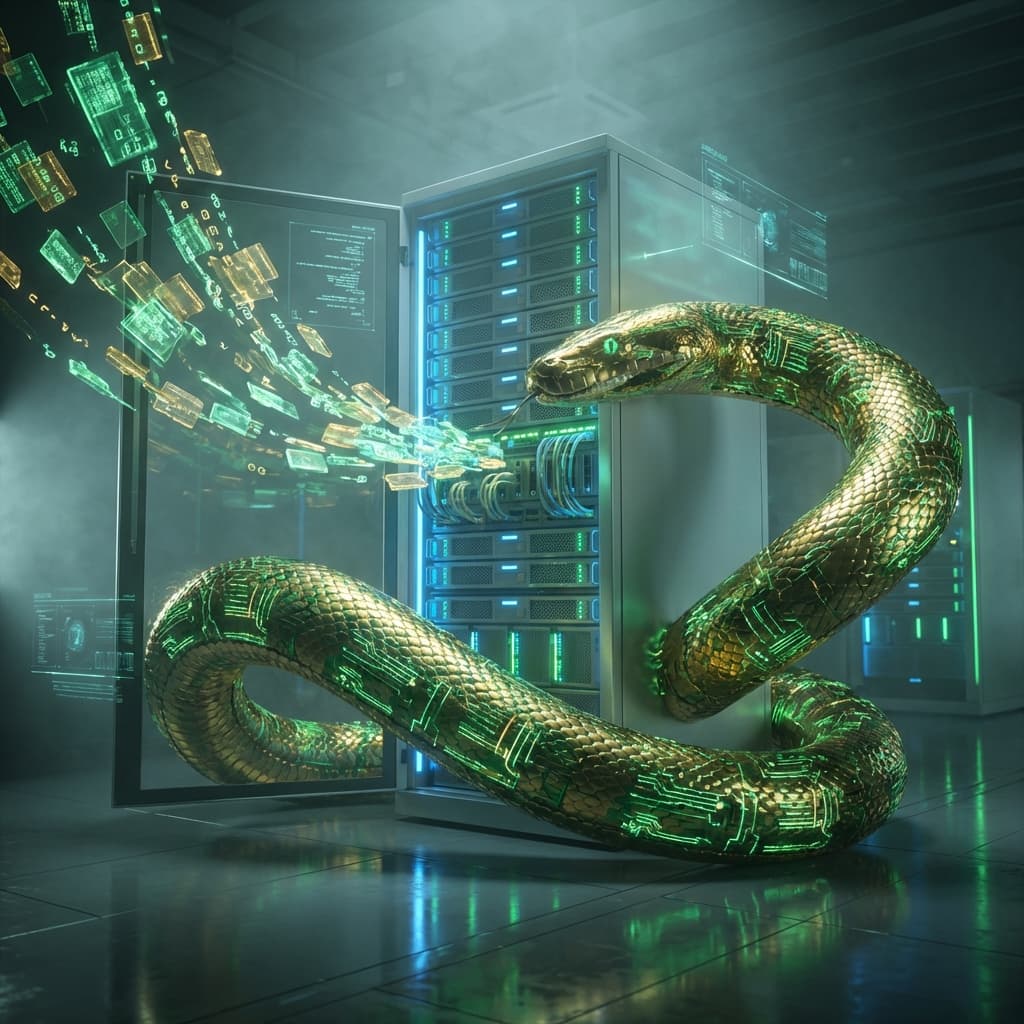
Executive Summary: The Python landscape for finance has changed. The single-threaded limitations of the Global Interpreter Lock (GIL) are no longer a bottleneck thanks to a new wave of Rust-optimized libraries. This guide outlines the mandatory toolset for any algorithmic trader in 2026, bidding farewell to legacy tools.
1. Introduction: The Need for Speed
For a decade, pandas and numpy were the twin kings of data science. But in high-frequency crypto markets, waiting 200ms for a DataFrame to reindex is a lifetime.
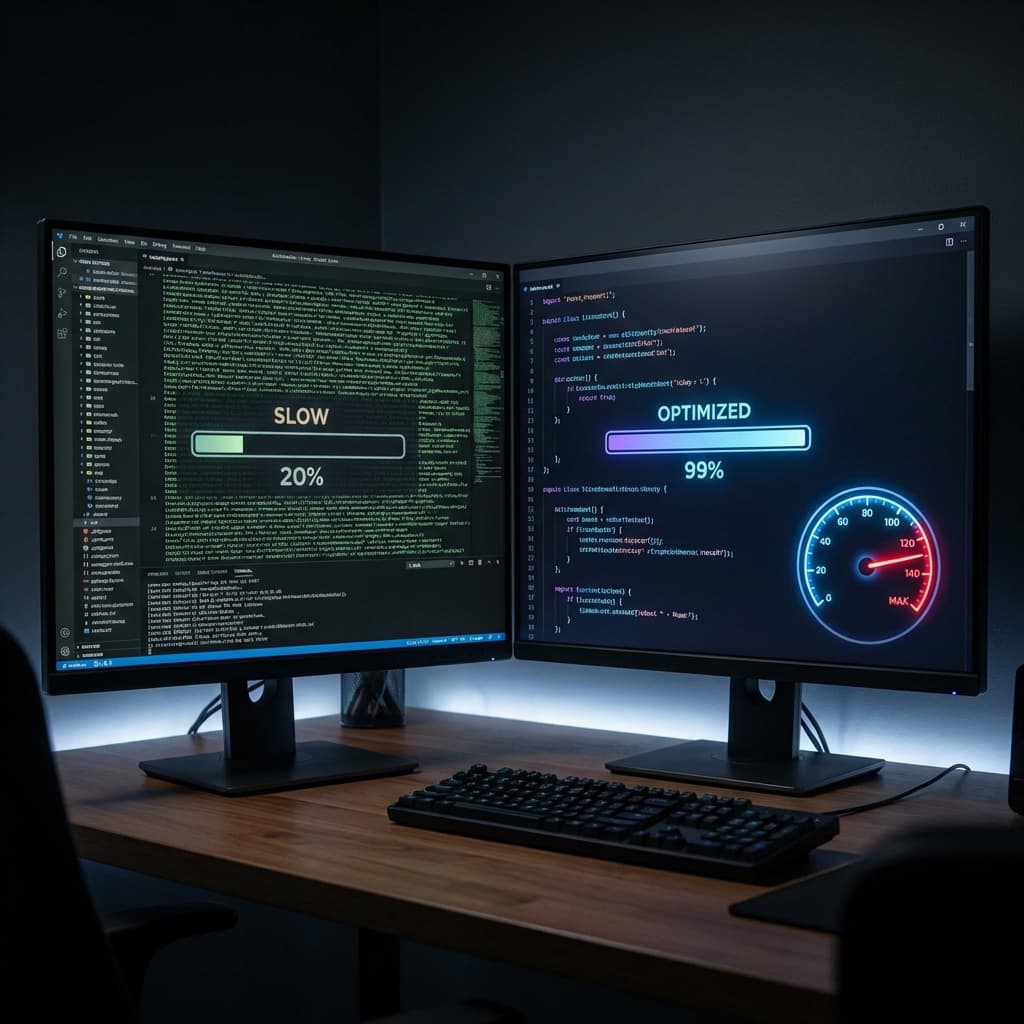
Enter the Rust-Python Bridge. The 2026 stack retains the ease of Python syntax but executes logic in bare-metal Rust. If you are still running .apply() on a Pandas DataFrame in your live trading loop, you are losing money to faster actors.
2. Core Analysis: The 2026 Library Ecosystem
2.1 Polars > Pandas
Polars has effectively replaced Pandas for time-series data. It is multi-threaded, lazy-evaluated, and memory-efficient.
- Benchmark: Loading 1 year of tick data takes 4.2s in Pandas vs 0.3s in Polars.
2.2 VectorBT Pro
Backtesting used to require writing for-loops. VectorBT (VBT) allows you to backtest 10,000 parameter combinations in a single matrix operation. It simulates the entire strategy as a linear algebra equation.
2.3 The Stack Comparison
| Category | Legacy Tool (2023) | Modern Tool (2026) | Why? |
|---|---|---|---|
| Dataframe | Pandas | Polars | Multi-threading, Rust backend |
| Backtesting | Backtrader | VectorBT | Vectorized speed (1000x faster) |
| Exchange | CCXT (Sync) | CCXT Pro (Async) | WebSocket Streaming |
| Execution | Custom Scripts | Hummingbot | Institutional connector architecture |
| AI/ML | Scikit-Learn | PyTorch Lightning | Modular Deep Learning |
3. Technical Implementation: A Modern Strategy
Here is a snippet showing a Polars-based SMA Crossover.
# 2026 Algo Syntax using Polars
import polars as pl
import vectorbt as vbt

# Load Ticket Data (Lazy Evaluation)
df = pl.scan_parquet("btc_usd_ticks.parquet")

# Calculate Indicators in Rust speed
strategy_df = df.with_columns([
    pl.col("close").rolling_mean(window_size=50).alias("sma_50"),
    pl.col("close").rolling_mean(window_size=200).alias("sma_200")
]).collect()

# Generate Signals
entries = strategy_df["sma_50"] > strategy_df["sma_200"]
exits = strategy_df["sma_50"] < strategy_df["sma_200"]

# Backtest with VBT
portfolio = vbt.Portfolio.from_signals(
    close=strategy_df["close"].to_numpy(),
    entries=entries.to_numpy(),
    exits=exits.to_numpy()
)

print(f"Total Return: {portfolio.total_return():.2%}")
4. Challenges & Risks: Async Complexity
The move to Asynchronous Programming (async/await) is the biggest hurdle for new quants.
- The Problem: If you put a
time.sleep(1)(blocking) inside an async function, you freeze the enormous speed advantage. You must useawait asyncio.sleep(1). This requires a mindset shift from sequential to event-driven thinking.
5. Future Outlook: Mojo Language
While Python reigns supreme today, the Mojo programming language (a superset of Python designed for AI hardware) is gaining traction. By 2027, we expect high-performance modules to be written in Mojo, offering C++ speeds with Python syntax.
6. FAQ: Python for Finance
1. Is Python fast enough for HFT? Not for nanosecond HFT (use C++). But for millisecond arbitrage and market making, the 2026 Python stack is perfectly adequate.
2. Why Hummingbot? Hummingbot handles the "boring" stuff: connectivity, error handling, and nonce management across 100+ exchanges, letting you focus on strategy logic.
3. Do I need a GPU? For backtesting with VectorBT? No (it uses CPU RAM). For training Neural Networks? Yes, absolutely.
4. Where can I get tick data?
TradingMaster AI provides an API endpoint for clean, normalized .parquet files tailored for Polars consumption.
5. Should I learn Rust? It helps, but you don't need to write it. Using Python libraries written in Rust (like Polars) gives you 90% of the benefit.

Related Articles
CosmWasm & IBC: The Future of Interchain Trading
Solidity is for local apps. Rust (CosmWasm) is for Interchain apps. Discover how IBC allows you to trade across 50+ blockchains instantly.
Decentralized Orderbook Architectures: The CLOB Evolution
AMMs were just the beginning. In 2026, the Central Limit Order Book (CLOB) has finally moved on-chain. We analyze Hyperliquid, dYdX v5, and the end of Impermanent Loss.
HFT Latency Arbitrage Techniques 2026: The Race to Zero
In the world of 2026 HFT, microseconds are eternities. Explore how FPGA hardware and quantum-resistant networks are redefining latency arbitrage.