

Decentralized Identity (DID) & Soulbound Tokens: You Are Not a Wallet

Executive Summary: Identity on the internet is broken. We rent our profiles from Facebook and X. In 2026, Decentralized Identity (DID) allows users to own their data. Soulbound Tokens (SBTs) allow for non-transferable reputation—proving you went to Harvard or paid off a loan without revealing your name.
Introduction
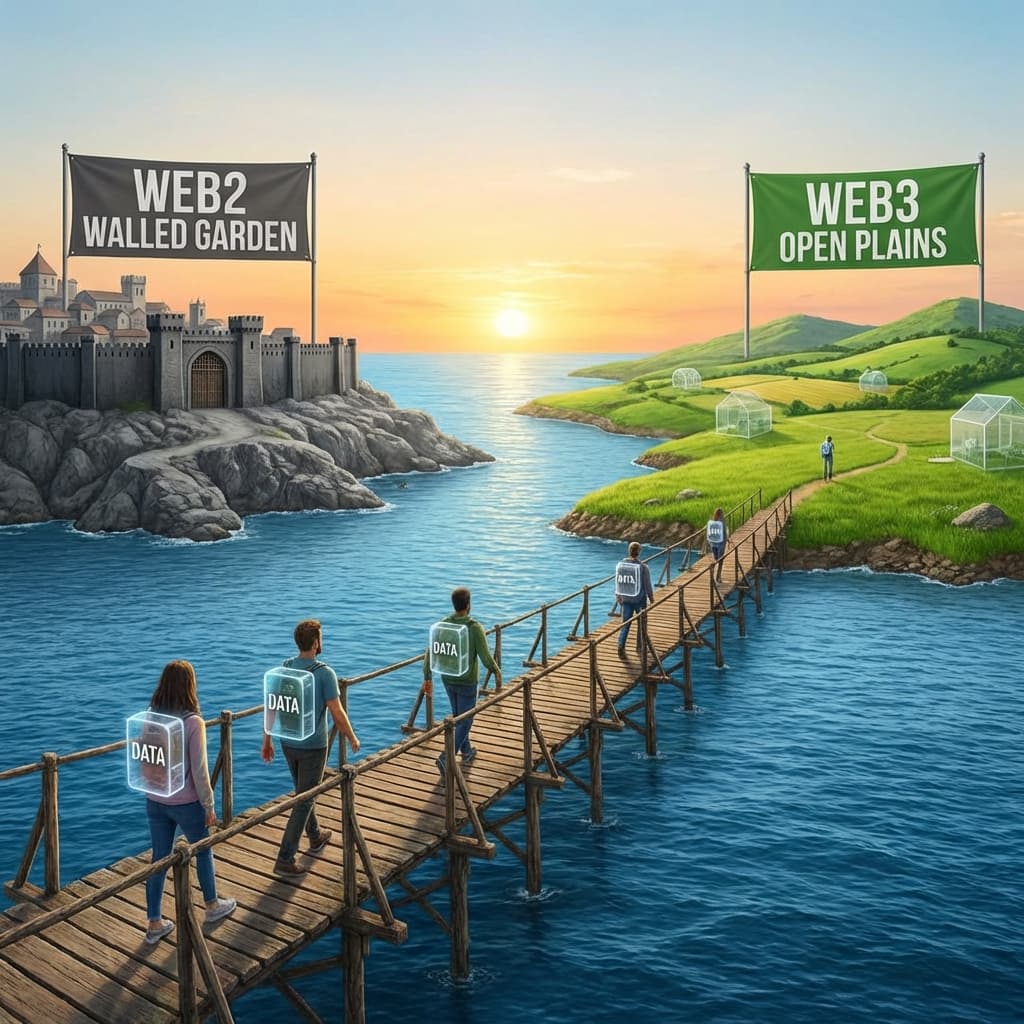
In Web2, you have 50 different usernames and passwords. Your data lives on servers you don't control.
In Web3, for a long time, you were just 0x71C.... Anonymous, but history-less.
Decentralized Identity (DID) bridges the gap. It is a W3C standard that describes who you are without relying on a centralized registry.
Soulbound Tokens (SBTs)
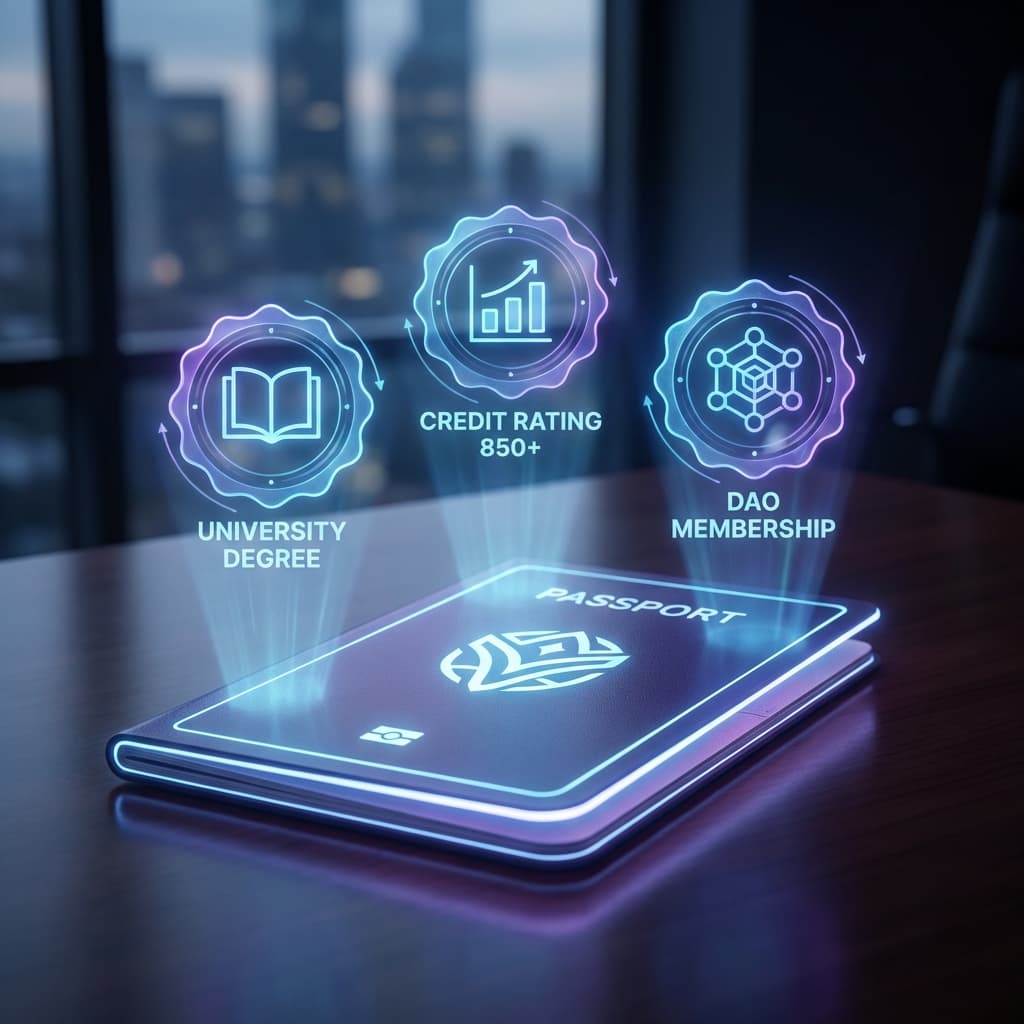
Vitalik Buterin proposed this. Most NFTs are transferable. If I buy a Bored Ape, I own it. Soulbound Tokens are non-transferable. Once sent to your wallet ("Soul"), they stick forever. They represent History and Reputation.
- Education: MIT issues an SBT diploma to your wallet. You can't sell it. It proves you graduated.
- Credit: Aave issues a "Good Borrower" SBT to users who repaid loans.
- Attendance: POAP (Proof of Attendance Protocol) proves you were at a specific event.
The "Verifiable Credential" Loop
- Issuer (University): Signs a credential saying "Alice graduated."
- Holder (Alice): Stores this in her Data Backpack (DID).
- Verifier (Employer): Asks Alice "Do you have a degree?"
- Proof: Alice's wallet presents the credential. The Employer verifies the University's signature on-chain.
No phone calls to the registrar. Instant verification.
Privacy: Zero-Knowledge DIDs
The fear is a "Black Mirror" surveillance state where your wallet reveals everything. That is why 2026 DIDs use Zero-Knowledge. Alice can prove she has a "Credit Score > 700" SBT without revealing what the exact score is or her transaction history. Polygon ID is the leader here, allowing granular privacy controls.
Use Cases 2026
1. Sybil Resistance (Gitcoin Passport)
DAOs are plagued by bots voting multiple times. DIDs solve this. A DAO can say "One Person, One Vote." To vote, your wallet must hold a "Humanity SBT" (verified by Worldcoin or similar).
2. Undercollateralized Lending
Currently, you need to deposit $150 ETH to borrow $100 USDC. With DIDs, if you have a "High Credit" SBT, you can borrow $100 with only $20 collateral. Your reputation is the collateral.
3. Portable Social Graph (Lens Protocol)
On Twitter, if they ban you, you lose your followers. On Lens, your followers are represented by NFTs. You own the graph. If you switch from app A to app B, you bring your followers with you. It is "User-Centric Social Media."
FAQ
Q: What if I lose my key? Do I lose my identity? A: This is where "Social Recovery" (from Account Abstraction) comes in. Your friends can help you recover your DID.
Q: Can I burn a Soulbound Token? A: Generally, yes. If you don't want an unwanted "Bad Reputation" token, you can hide or burn it, though the issuer might be able to re-issue it (like a criminal record). It brings complex ethical questions.
Q: Who controls the standard? A: The W3C (World Wide Web Consortium). It is an open standard, not owned by Ethereum or Bitcoin.
Conclusion
DIDs turn the internet from a "Place we visit" to a "Place we inhabit." By owning our digital souls, we reclaim power from the tech giants. In 2026, your reputation is your most valuable asset, and for the first time, it actually belongs to you.

Related Articles
Quantum-Safe Blockchains: Preparing for Q-Day 2030
Quantum computers will break Bitcoin's encryption. Here is the survival guide. How Ethereum and Algorand are migrating to Post-Quantum Cryptography (PQC).
Zero-Knowledge Proofs: Privacy is the New Scalability
Everything you know about privacy is wrong. ZK-Proofs allow you to prove you are solvent without revealing your bank balance. A deep dive into ZK-Rollups and ID.
Account Abstraction (ERC-4337): The Death of the Seed Phrase
We finally fixed the UX problem. Learn how Smart Accounts allow social recovery, gasless transactions, and biometric signing in 2026.