

How to Bridge Assets: The Ultimate Cross-Chain Tutorial

Executive Summary: Blockchains are like islands. Bitcoin is Hawaii. Ethereum is New York. To move money between them, you need a boat (a Bridge). This guide explains how bridging works, the risks involved, and how to use the TradingMaster Bridge Aggregator.
What is a Bridge?
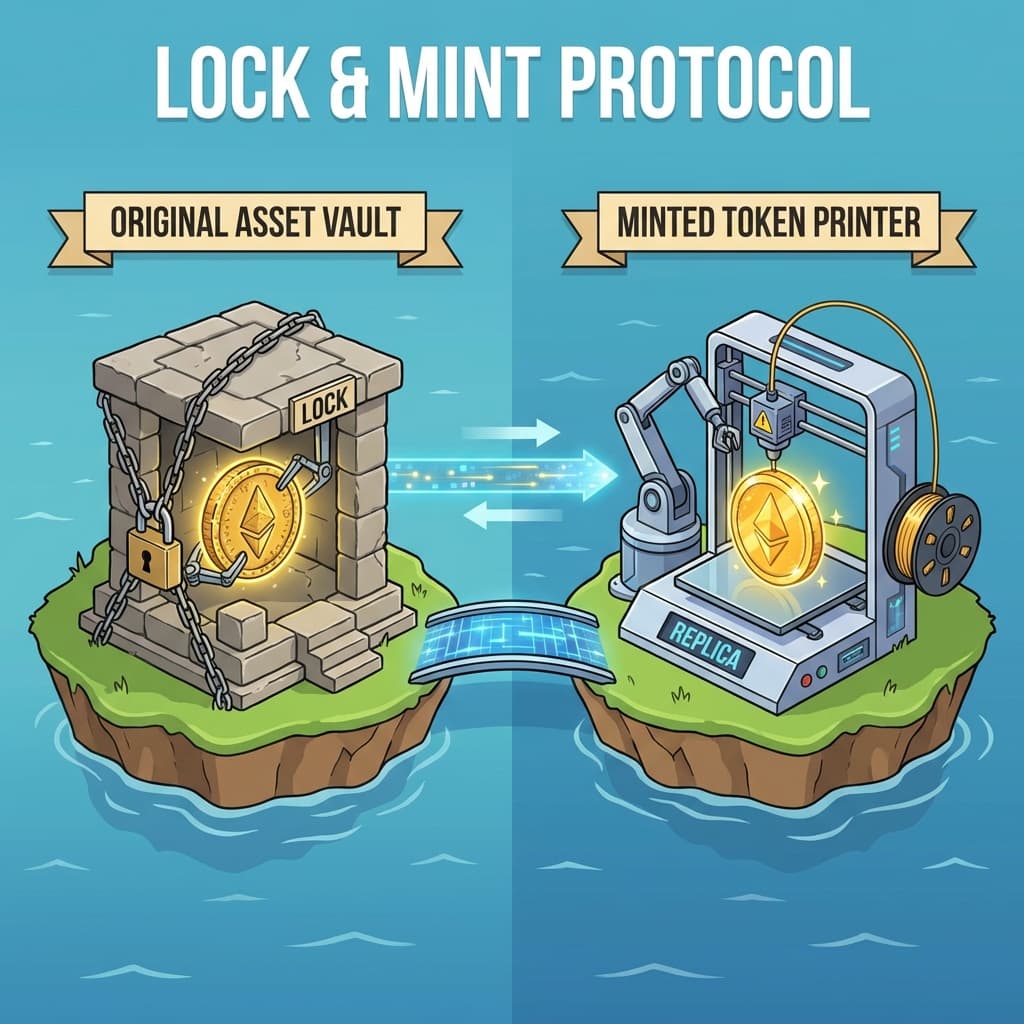
You can't send Bitcoin to an Ethereum wallet. They speak different languages. A Bridge is a protocol that allows you to move value. Most bridges work on the "Lock and Mint" model:
- You lock 1 BTC in a vault on the Bitcoin network.
- The Bridge sees this and mints 1 "Wrapped BTC" (wBTC) on Ethereum.
- The wBTC has value because it can always be redeemed for the real BTC.
Top Bridges in 2026
1. Circle CCTP (Native USDC Bridge)
The safest way to move USDC. Instead of locking/minting, Circle literally burns your USDC on Chain A and mints new USDC on Chain B. There is zero "Honeypot Risk" because there is no massive vault of locked tokens to hack.
2. Wormhole (Cross-Chain Messaging)
The giant. It connects Ethereum, Solana, Sui, and 20+ others. Wormhole is a "Portal" that passes messages. It enables you to trade on a Solana DEX using ETH from your Mainnet wallet.
3. LayerZero (Omnichain)
LayerZero isn't just a bridge; it's a protocol. It allows developers to build "OFTs" (Omnichain Fungible Tokens) that can move freely between chains without wrapping.

Step-by-Step: Bridging ETH to Base
You have ETH on Mainnet ($50 gas fees). You want to move to Base ($0.01 gas fees).
- Go to TradingMaster Bridge: We aggregate routes (Socket/LiFi) to find the cheapest path.
- Select Chains: From "Ethereum" -> To "Base".
- Enter Amount: "1 ETH".
- Review Route: It might recommend "Across Bridge" (fastest, 2 mins) or "Stargate" (cheapest).
- Approve & Send: Confirm transaction.
- Wait: Do not panic. Bridging takes 2-10 minutes.
- Arrival: Your ETH appears on Base.
Safety Tips
- Official Links Only: Never Google "Bridging to Base." Scammers buy ads for fake sites that drain your wallet. Use TradingMaster or the official foundation bridges (bridge.base.org).
- Small Test: Always send $10 first. If it arrives, send the rest.
- Liquidity: Check the slippage. If you are bridging $1 Million, you might get a bad rate on a small bridge.
Conclusion
Bridging is the passport scan of the crypto world. It's a bit annoying, but it's the gateway to a world of lower fees and faster dApps. In 2026, with "Intents," bridging is happening more in the background, but understanding the mechanics is crucial for safety.

Related Articles
Understanding Gas Fees: Why Did I Pay $50 for a $10 Trade?
EIP-1559, Base Fees, and Priority Fees explained. Learn how to optimize your transaction timing to save thousands on Ethereum gas.
Security 101: Hardware Wallets & Revoke.cash
Don't be a statistic. Learn the difference between Hot and Cold wallets, and why revoking token approvals is the most important habit you need.