
Modular Blockchains 2026: The Celestia Revolution

Executive Summary: The "Scalability Trilemma" has been solved not by trying to do everything on one chain, but by breaking the chain apart. By 2026, Modular Blockchain architectures—led by Celestia and Avail—have become the standard for deployment, allowing developers to launch high-performance L2s as easily as deploying a website.
Introduction
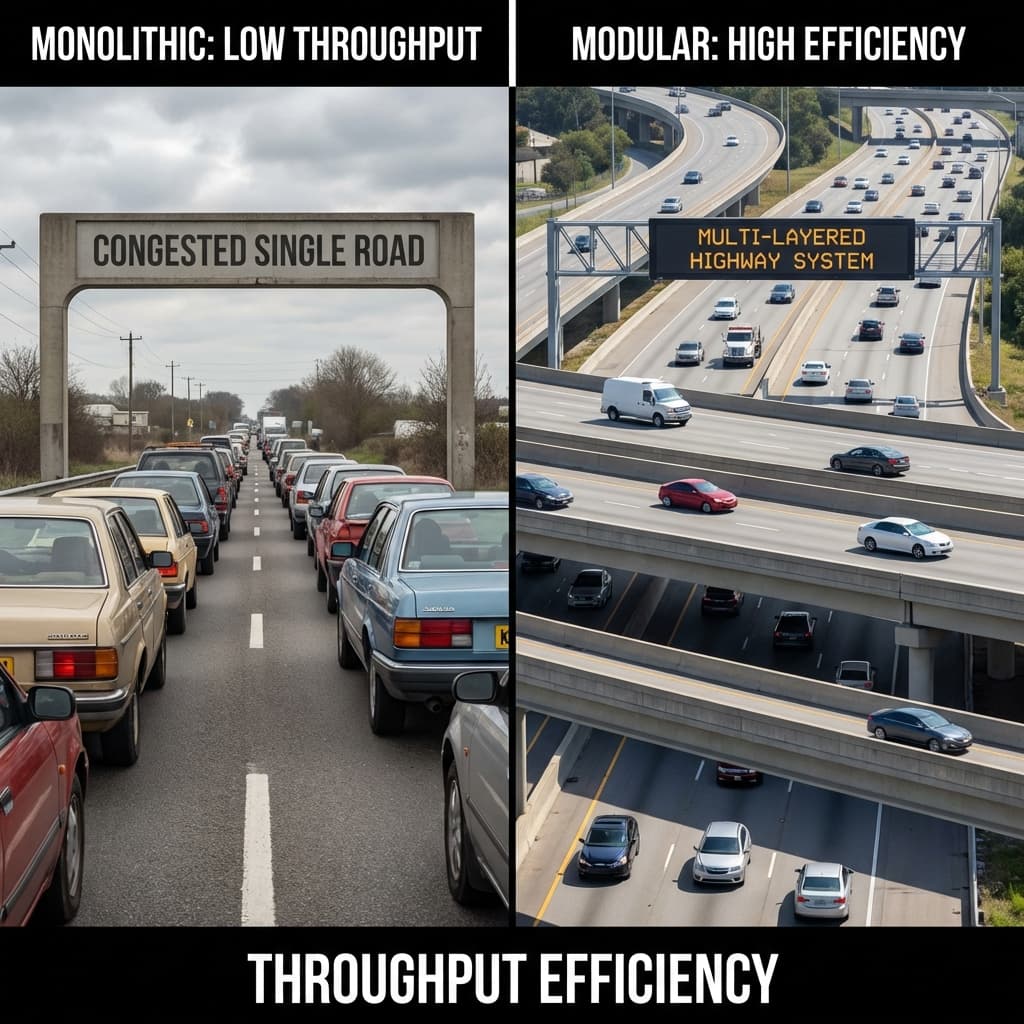
For the first 15 years of crypto, we built Monolithic Blockchains. Bitcoin and Ethereum (1.0) tried to handle execution, consensus, settlement, and data availability all on a single layer. The result? Congestion, $50 gas fees, and slow innovation.
In 2026, the paradigm has shifted to Modular. Just as cloud computing allowed apps to scale by separating storage (S3) from compute (EC2), Modular Blockchains allow chains to scale by outsourcing their heavy lifting to specialized layers.
The Modular Stack
The 2026 blockchain is not a single chain, but a Lego tower.
1. Execution Layer (Rollups)
This is where the user lives. Chains like Arbitrum or Base handle the transactions. They are fast and cheap because they don't store the massive history of data—they just do the math.
2. Settlement Layer (Ethereum)
This is the supreme court. Rollups post "proofs" here to finalize transactions and bridge assets. It provides the security guarantee.
3. Data Availability (DA) Layer (Celestia)
This was the missing piece. Celestia does one thing only: it proves that the transaction data was published. It doesn't run smart contracts. It creates a cheap, massive bulletin board for Rollups to dump their data on.
Why Celestia Won the "DA Wars"
By decoupling Data Availability, Celestia reduced the cost of launching an L2 by 99%. In 2024, launching an L2 cost $50k/month in Ethereum gas fees just to post data. In 2026, using Celestia, it costs <$500/month. This sparked the "App-Chain Explosion." Now, a decentralized exchange (DEX) or a GameFi project doesn't deploy a contract on Ethereum; it deploys its own blockchain (L3) using Celestia for cheap data and Ethereum for security.
Avail vs. Celestia: The 2026 Rivalry
While Celestia pioneered the model, Avail (spun out of Polygon) competed on "Validity Proofs."
- Celestia: Uses Fraud Proofs (Optimistic). Fast and simple.
- Avail: Uses ZK-Proofs (validity). mathematically verifiable and integrates deeper with the Polygon AggLayer. In 2026, both thrive: Celestia powers the Cosmos/Sovereign rollup ecosystem, while Avail powers the Polygon/ZK-EVM ecosystem.
The End of "Congestion"
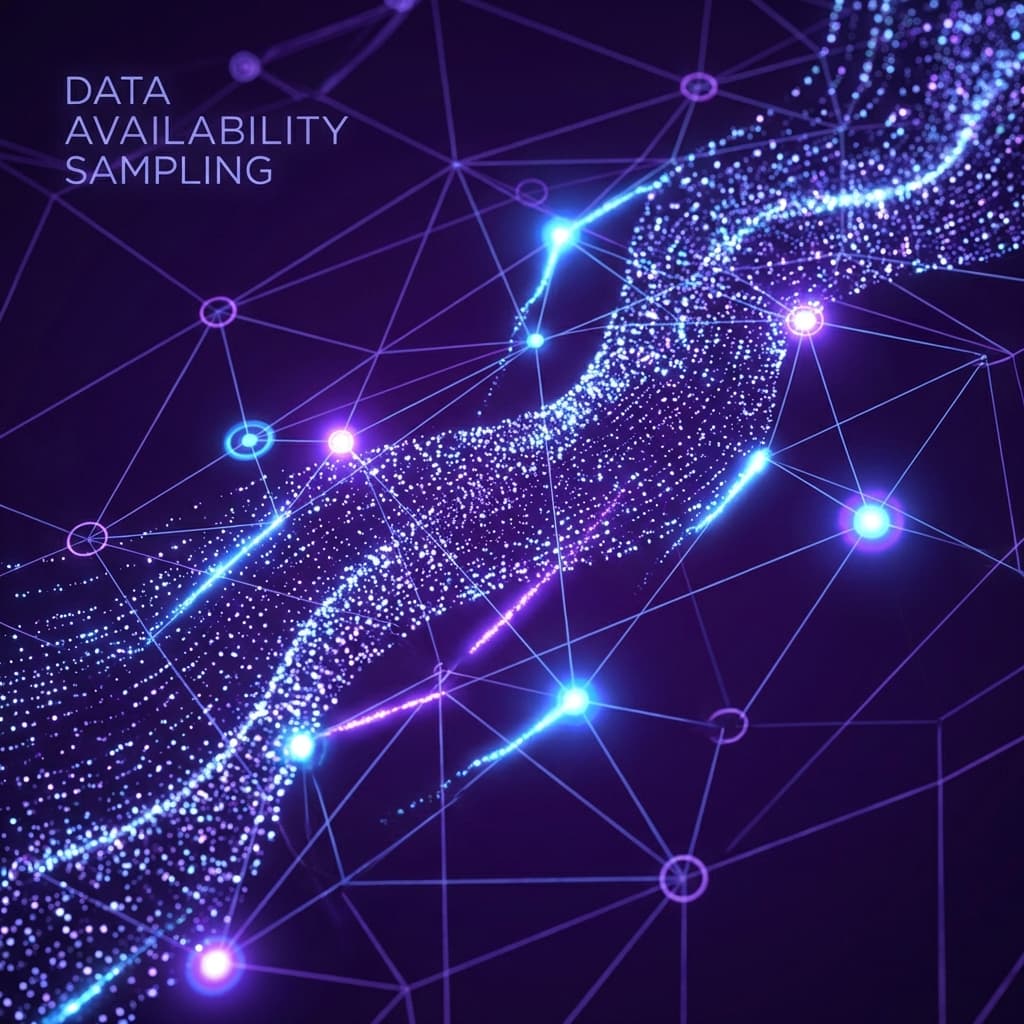
Because of Data Availability Sampling (DAS), Modular networks actually get faster as more nodes join. Light nodes can verify the network on a smartphone without downloading the whole blockchain. This has allowed crypto to finally handle "Web2 Scale" apps—social networks and MMO games—without crashing the network.
FAQ
Q: Is Ethereum a modular blockchain? A: It is transitioning. With "Danksharding" (EIP-4844) and the rollup-centric roadmap, Ethereum is becoming a Modular Settlement Layer.
Q: What is a "Sovereign Rollup"? A: A blockchain that publishes data to Celestia but handles its own settlement. It is like a country that uses the UN for record-keeping but has its own supreme court.
Q: Why does DA matter for users? A: DA costs are 90% of transaction fees on L2s. Cheaper DA means $0.01 swap fees instead of $0.50.
Q: Can Celestia go down? A: Like any blockchain, yes. If the DA layer halts, the Rollups using it also halt (safety mechanism).
Q: How do I invest in this trend? A: The main plays are the DA Layer tokens (TIA, AVAIL) or the "Rollup-as-a-Service" (RaaS) providers like AltLayer that build the Legos.
Conclusion
The Modular Era has ended the scaling debate. We no longer ask "Can blockchains handle 100,000 TPS?" We know they can. The challenge for 2026 is no longer throughput, but Interoperability—connecting these thousands of modular chains into a seamless user experience.

Related Articles
Stablecoins: The New Global Settlement Rails
SWIFT is too slow. Visa is too expensive. In 2026, Stablecoins settle $50 Trillion annually, becoming the default layer for cross-border B2B payments.
BNPL 2.0: The B2B Credit Revolution
Buy Now Pay Later isn't just for sneakers anymore. In 2026, B2B BNPL allows companies to finance cloud costs, inventory, and SaaS subscriptions on-chain.
Tokenized Mortgages 2026: Home Ownership on the Blockchain
The 30-day closing period is history. Tokenized mortgages allow for instant settlement, fractional ownership, and global liquidity for real estate debt.