


Tokenized U.S. Treasury Bills: The On-Chain Risk-Free Rate of 2026
Executive Summary: By 2026, tokenized U.S. Treasury Bills have transitioned from a niche experiment to the foundational 'risk-free rate' of the decentralized economy. This report analyzes the dominance of platforms like Ondo and Franklin Templeton, the integration of T-Bills as standard DeFi collateral, and the regulatory clarity that unleashed institutional liquidity.
Introduction
In the financial landscape of 2026, the concept of "yield" has been fundamentally re-engineered. Gone are the days when stablecoin holders had to rely solely on high-risk algorithmic protocols or opaque lending desks to generate returns on their idle cash. Today, Tokenized U.S. Treasury Bills (T-Bills) serve as the bedrock of the on-chain economy, effectively importing the "risk-free rate" of the traditional financial world into the 24/7 liquidity of the blockchain.
The convergence of high-interest rate environments and the maturation of Real-World Asset (RWA) protocols has created a $50 billion on-chain T-Bill market. Institutional investors, DAOs, and even retail users now treat tokenized Treasuries not just as an investment product, but as a utility token—using them as collateral in DeFi lending, margin for derivatives trading, and a stable store of value that beats inflation.
The Evolution of the "Risk-Free" Rate (2023-2026)
The migration of U.S. government debt onto the blockchain was driven by a simple arbitrage: why hold a non-yielding stablecoin when you can hold a tokenized T-Bill yielding 4-5% with instant liquidity?
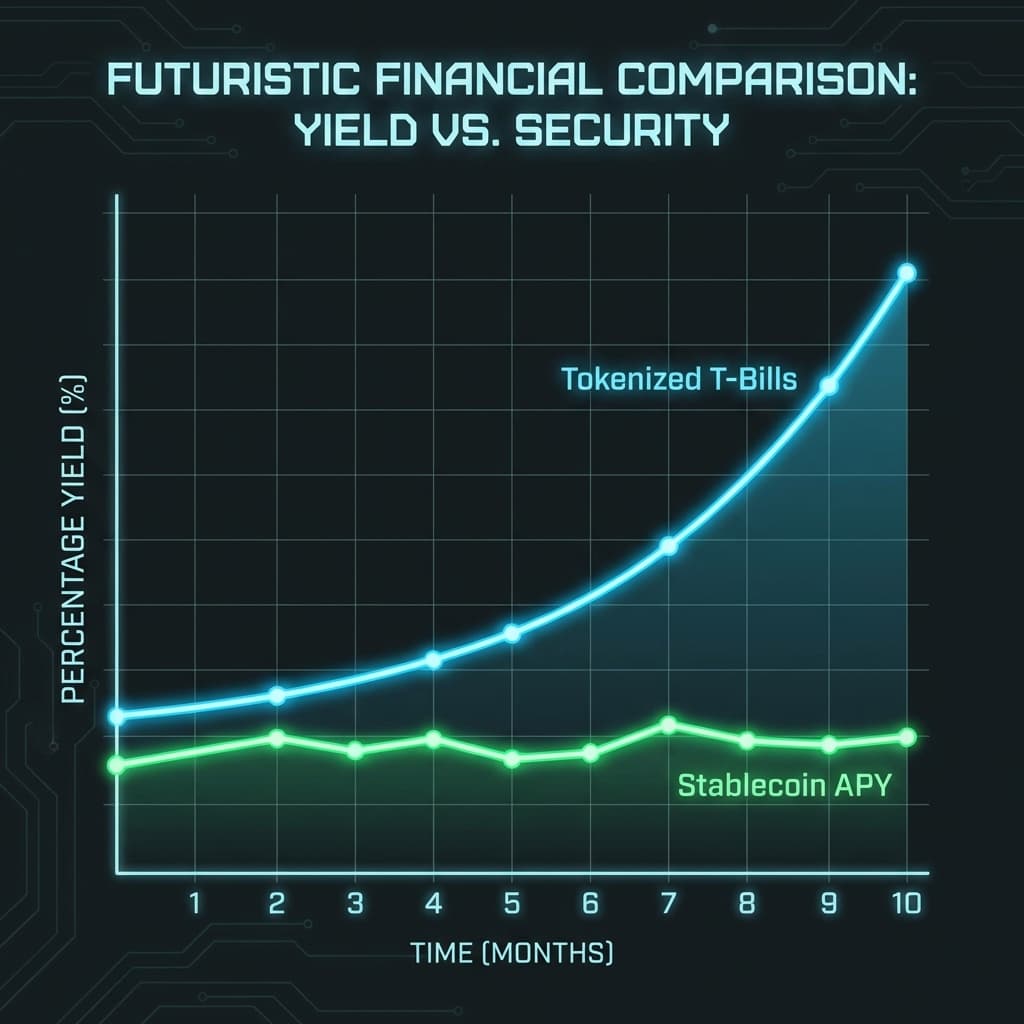
Traditional vs. 2026 Tokenized Model
| Feature | Traditional T-Bill Investing | Tokenized T-Bills (2026 Model) |
|---|---|---|
| Settlement Time | T+1 or T+2 (Business Days) | T+0 (Instant / Block Time) |
| Liquidity | Market Hours Only (9:30 AM - 4:00 PM ET) | 24/7 Global Transferability |
| Collateral Utility | Repo Markets (Institutional Only) | Universal DeFi Collateral (Aave, Maker, etc.) |
| Minimum Investment | High ($10k - $100k for direct access) | Fractional (< $1.00) |
| Composability | Isolated in Brokerage Accounts | Fully Composable (Restaking, Looping) |
The Ecosystem Leaders of 2026
The market has consolidated around a few key players who have successfully navigated the regulatory minefield to offer compliant, liquid products.
1. Franklin Templeton (The Incumbent)
The Franklin OnChain U.S. Government Money Fund (FOBXX) remains the gold standard for institutional heavyweights. By leveraging the Polygon and Stellar networks, they have seamlessly integrated their fund into the treasury management systems of Fortune 500 companies, treating the blockchain simply as a more efficient transfer ledger.
2. Ondo Finance (The DeFi Bridge)
Ondo has solidified its position as the bridge for the crypto-native. Their OUSG (U.S. Government Bond Fund) and USDY (Yield-bearing stablecoin) are now ubiquitous in DeFi. In 2026, Ondo's "flux finance" protocol allows users to lend stablecoins against tokenized T-Bills, creating a permissionless repo market that rivals traditional prime brokerage desks in efficiency.
3. BlackRock's BUIDL
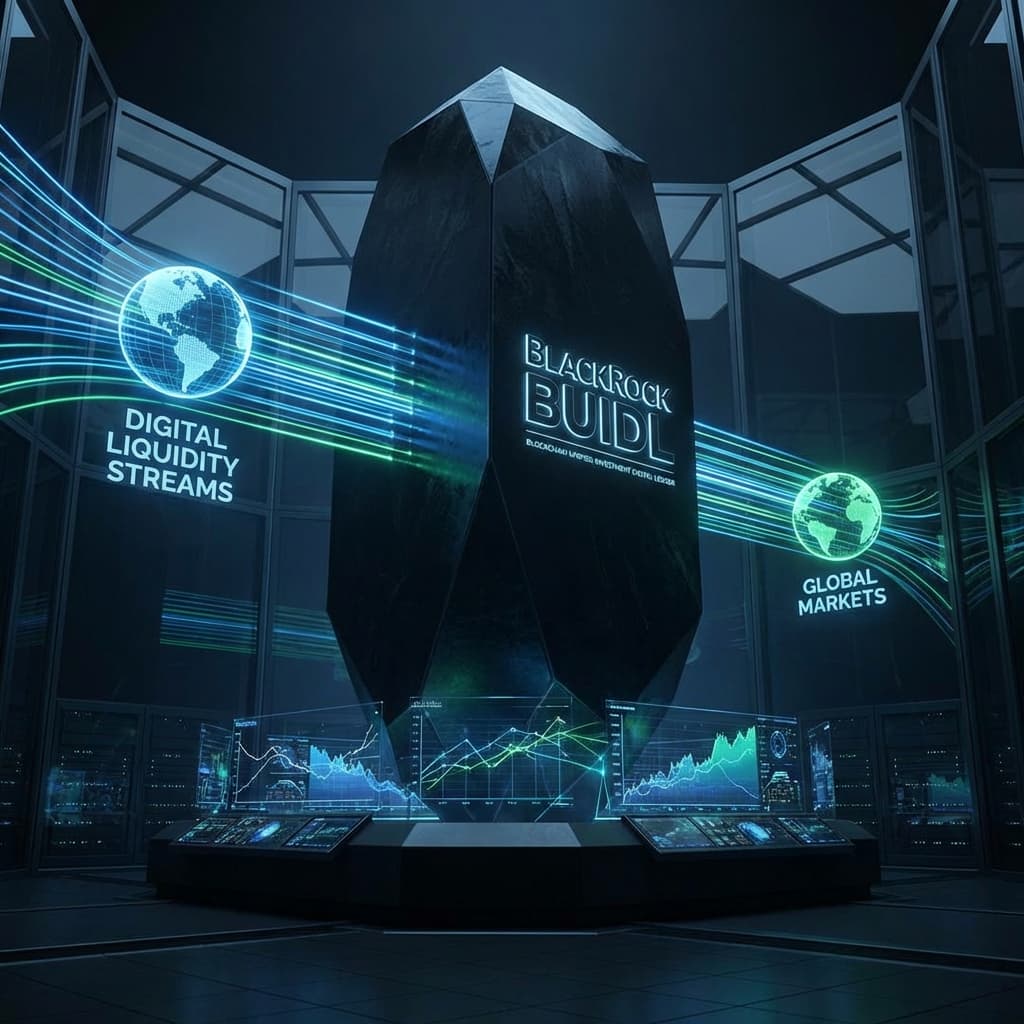
BlackRock's entry in late 2024 was the catalyst, but by 2026, their BUIDL fund has become the largest liquidity black hole in the ecosystem. It serves as the primary backing for several regulated stablecoins, effectively meaning that a significant portion of the on-chain dollar supply is now directly backed by tokenized debt managed by the world's largest asset manager.
Technical & Regulatory Context
The GENIUS Act Impact
The passing of the GENIUS Act (Guidance for Emerging New Integrated Unified Stablecoins) in 2025 provided the necessary legal framework. It explicitly defined "Qualified Collateral" for stablecoins, positioning short-term U.S. Treasuries as the preferred backing asset. This incentivized issuers like Circle and Tether to move entirely to on-chain transparency, verifying their reserves via Chainlink's Proof of Reserve (PoR) feeds in real-time.
DeFi Integration (ERC-4626)
The adoption of the ERC-4626 Tokenized Vault Standard has been critical. It standardized how yield-bearing tokens interact with DeFi applications. Now, a tokenized T-Bill from Provider A shares the same interface as one from Provider B, allowing aggregators to automatically route user funds to the highest net yield (post-fees) without complex manual bridging.
Challenges and Risks
- KYC/AML Whitelisting: Unlike permissionless tokens, most T-Bill tokens require KYC. This introduces friction and limits the "money lego" potential to permissioned pools or wrapped versions that introduce counterparty risk.
- Regulatory Reversal: While the GENIUS Act provided clarity, the specific enforcement of "control" over the underlying assets remains a hot button issue. If the SEC decides that the token itself is a distinct security from the underlying bill, it could fracture liquidity.
- Smart Contract Risk: The underlying asset is risk-free (assuming the U.S. government doesn't default), but the delivery mechanism is not. A bug in the token contract or the bridge poses a catastrophic risk that traditional brokerage accounts do not face.
Future Outlook
As we look toward 2027, the trend is moving from "Tokenized T-Bills" to "Tokenized Sovereign Debt Markets." We are already seeing pilots from the UK (Gilts) and Singapore (SGS Bonds) launching on public blockchains. The ultimate destination is a Global Ledger of Sovereign Debt, where capital flows instantly to the jurisdiction offering the best risk-adjusted real yield, enforcing fiscal discipline on governments through real-time market feedback.
FAQ
Q: Can I buy tokenized T-Bills with a regular MetaMask wallet? A: Yes, but typically through "wrapped" non-KYC versions or via permissioned pools if you have completed identity verification with the issuer (like Ondo or Backed).
Q: Are the yields guaranteed? A: The yield is derived from the underlying U.S. Treasury Bill. While the T-Bill itself is backed by the full faith and credit of the U.S. government, the token carries additional smart contract and issuer counterparty risks.
Q: How often is the yield paid out? A: It depends on the token model. Some are "distributing" (airdropping more tokens to your wallet daily), while others are "accumulating" (the token price increases in value to reflect the accrued interest).
Q: Can I use tokenized T-Bills as collateral for a loan? A: Absolutely. In 2026, major lending protocols like Aave and Morpho allow you to borrow stablecoins (like USDC) against your tokenized T-Bill collateral, often up to 90% LTV.
Q: What happens if the internet goes down? A: The ownership is recorded on the blockchain. However, almost all RWA issuers maintain an off-chain "Shadow Ledger" as a legal requirement, ensuring that even in a catastrophic blockchain failure, legal ownership of the underlying security can be proven.
Conclusion
Tokenized U.S. Treasury Bills have successfully matured from a crypto novelty to a systemic pillar of the digital economy. By solving the "opportunity cost" of holding stablecoins, they have unlocked billions in capital efficiency. For the investor in 2026, the question is no longer if they should hold tokenized RWAs, but how to best integrate them into a diversified, automated portfolio. The merger of state-backed security and blockchain velocity is complete.

Related Articles
Stablecoins: The New Global Settlement Rails
SWIFT is too slow. Visa is too expensive. In 2026, Stablecoins settle $50 Trillion annually, becoming the default layer for cross-border B2B payments.
BNPL 2.0: The B2B Credit Revolution
Buy Now Pay Later isn't just for sneakers anymore. In 2026, B2B BNPL allows companies to finance cloud costs, inventory, and SaaS subscriptions on-chain.
Tokenized Mortgages 2026: Home Ownership on the Blockchain
The 30-day closing period is history. Tokenized mortgages allow for instant settlement, fractional ownership, and global liquidity for real estate debt.