

Understanding Gas Fees: Why Did I Pay $50 for a $10 Trade?
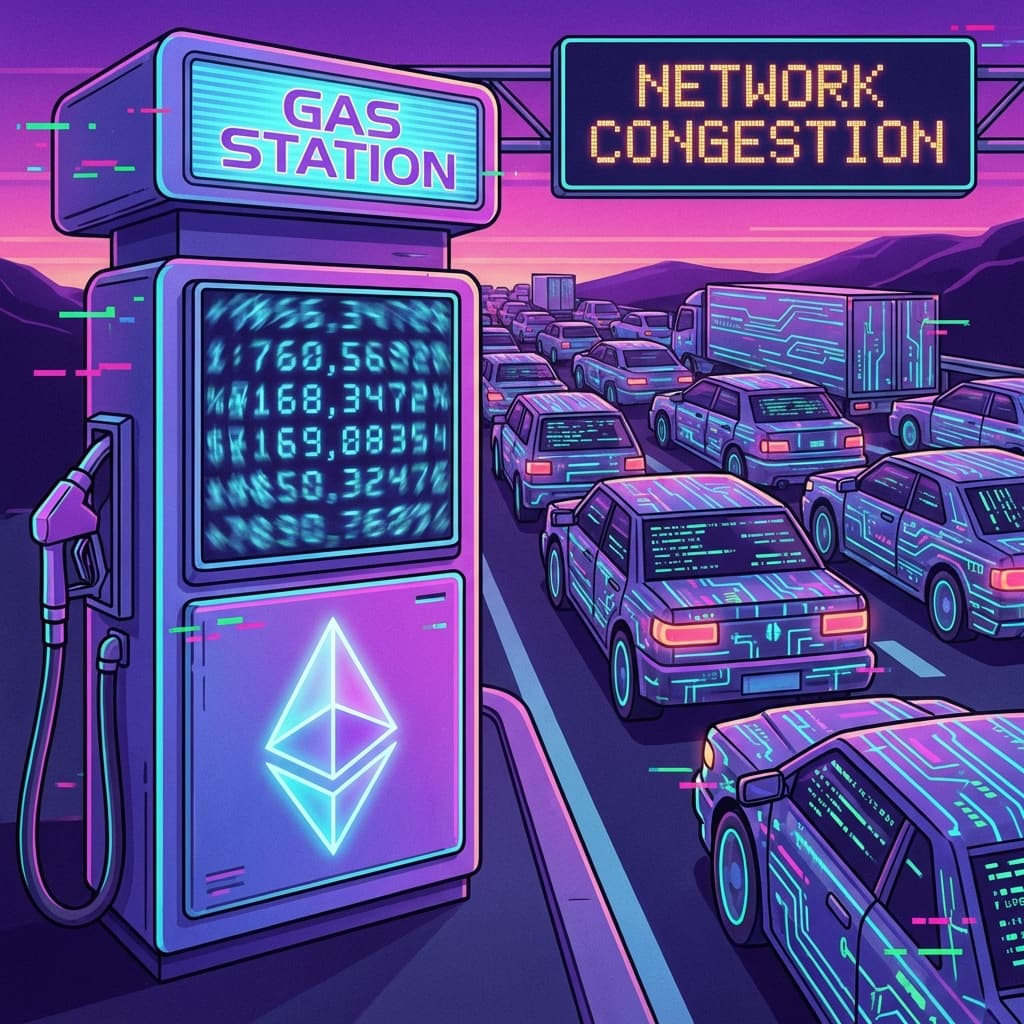
Executive Summary: Gas is the fuel of the blockchain. It pays the validators to process your transaction. This article explains the mechanics of Ethereum's EIP-1559 fee market, why Layer 2s are cheaper, and how to avoid overpaying during network congestion.
1. What is Gas?
Ethereum is a "World Computer." It has limited processing power. To run a line of code (a transaction), you must rent this computing power. Gas = Computing Work. Gas Price = The cost per unit of work. Fee = Gas Used * Gas Price.
2. EIP-1559: The "London" Upgrade
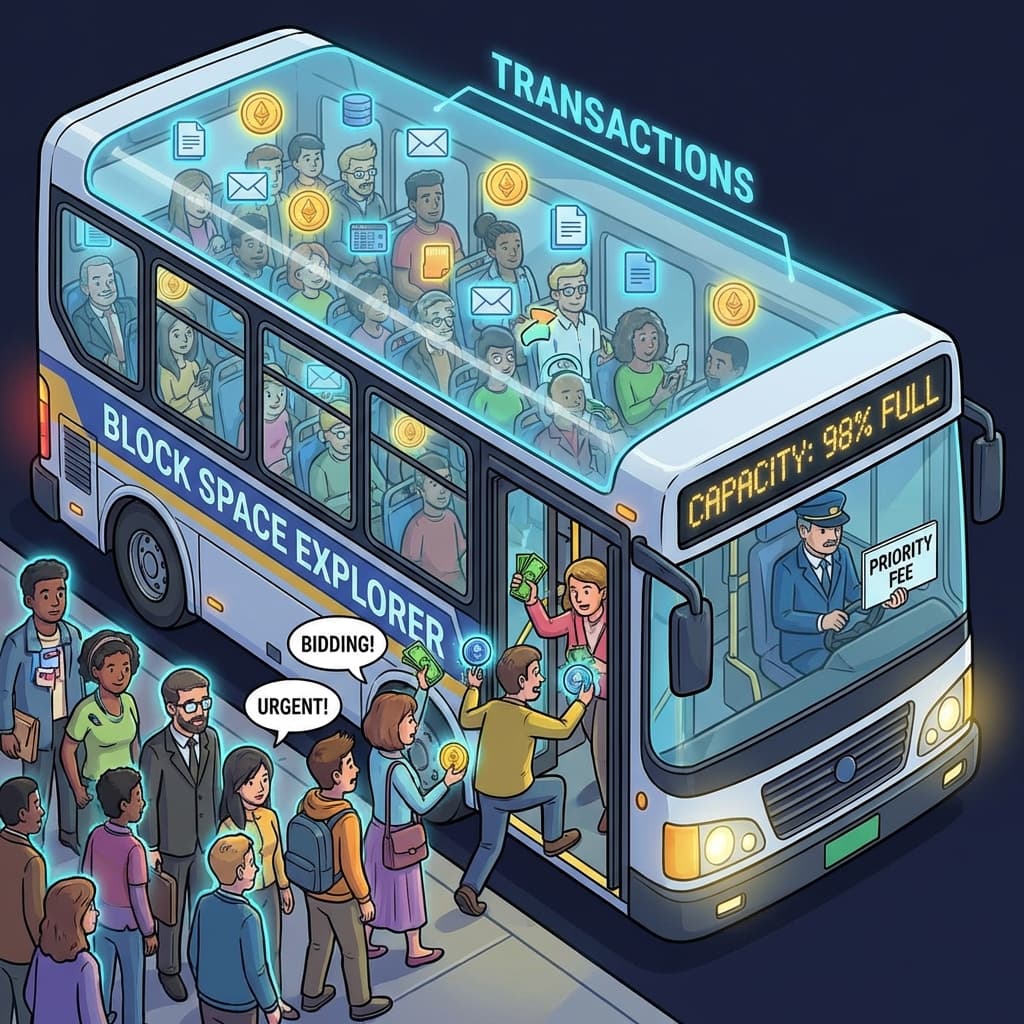
Before 2021, gas was a blind auction. It was chaotic. EIP-1559 introduced a predictable system:
- Base Fee: The minimum price to get into the next block. This is set by the protocol based on demand. This fee is burned (destroyed).
- Priority Fee (Tip): A bribe to the validator to include your transaction first.
- Max Fee: The absolute most you are willing to pay.
3. Why L2s are Cheap (Data Availability)
Mainnet Ethereum is expensive because every node must store every transaction forever. Layer 2s (Arbitrum, Base) execute the trades off-chain and zip them into a "Call Data" batch. They rely on Ethereum for security but do the math elsewhere. The Dencun Upgrade (EIP-4844) introduced "Blobs"—temporary storage for L2 data. This dropped L2 fees from $0.50 to $0.001.
4. How to Save Money
Time Your Trades
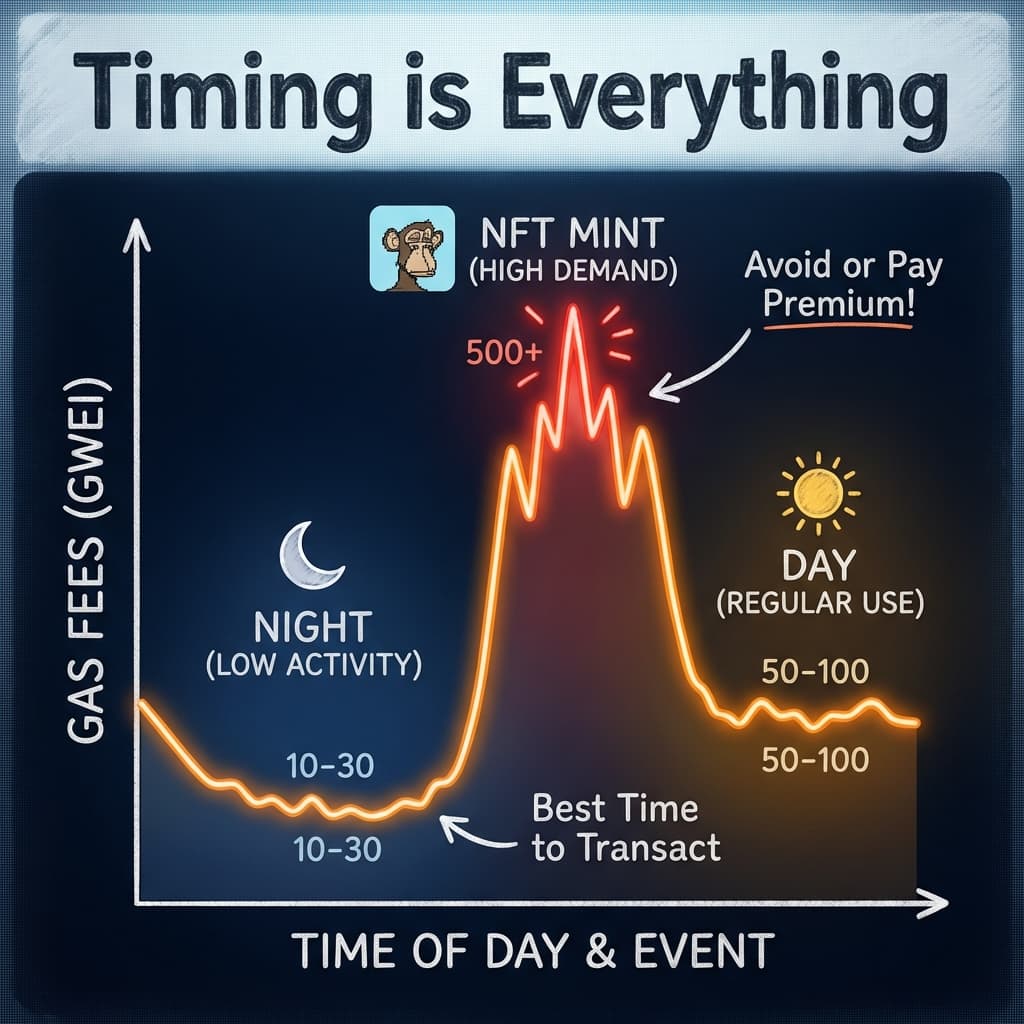
Gas tracks human activity.
- Expensive: 9 AM - 5 PM EST (US Workday) and NFT Mint times.
- Cheap: Sunday Mornings (EST). The world is asleep. Use a tool like Etherscan Gas Tracker to see current prices (measured in Gwei).
- < 10 Gwei: Cheap. Do complex tasks (Bridging, Staking).
-
50 Gwei: Expensive. Only trade if urgent.
Use Layer 2s
Unless you are a whale moving $100k, stop using Ethereum Mainnet. Use Arbitrum or Base. The user experience is identical, but the fees are negligible.
Custom Nonce/Gas limit
In the TradingMaster settings, you can edit the gas limit. Warning: If you set it too low, the transaction will get stuck ("Pending") for hours. Only lower the Priority Fee, never the Base Fee.
Conclusion
Gas fees are the price of decentralization. Visa is cheap because it's centralized. Ethereum is expensive because it is run by thousands of independent validators. But with Layer 2 scaling, high fees are becoming a memory.

Related Articles
Security 101: Hardware Wallets & Revoke.cash
Don't be a statistic. Learn the difference between Hot and Cold wallets, and why revoking token approvals is the most important habit you need.
How to Bridge Assets: The Ultimate Cross-Chain Tutorial
Stuck on Ethereum? Here is how to move your crypto to Solana, Base, and Arbitrum safely using bridges like Wormhole and LayerZero.