
DeFi Insurance Protocols 2026: Protecting Your Yield
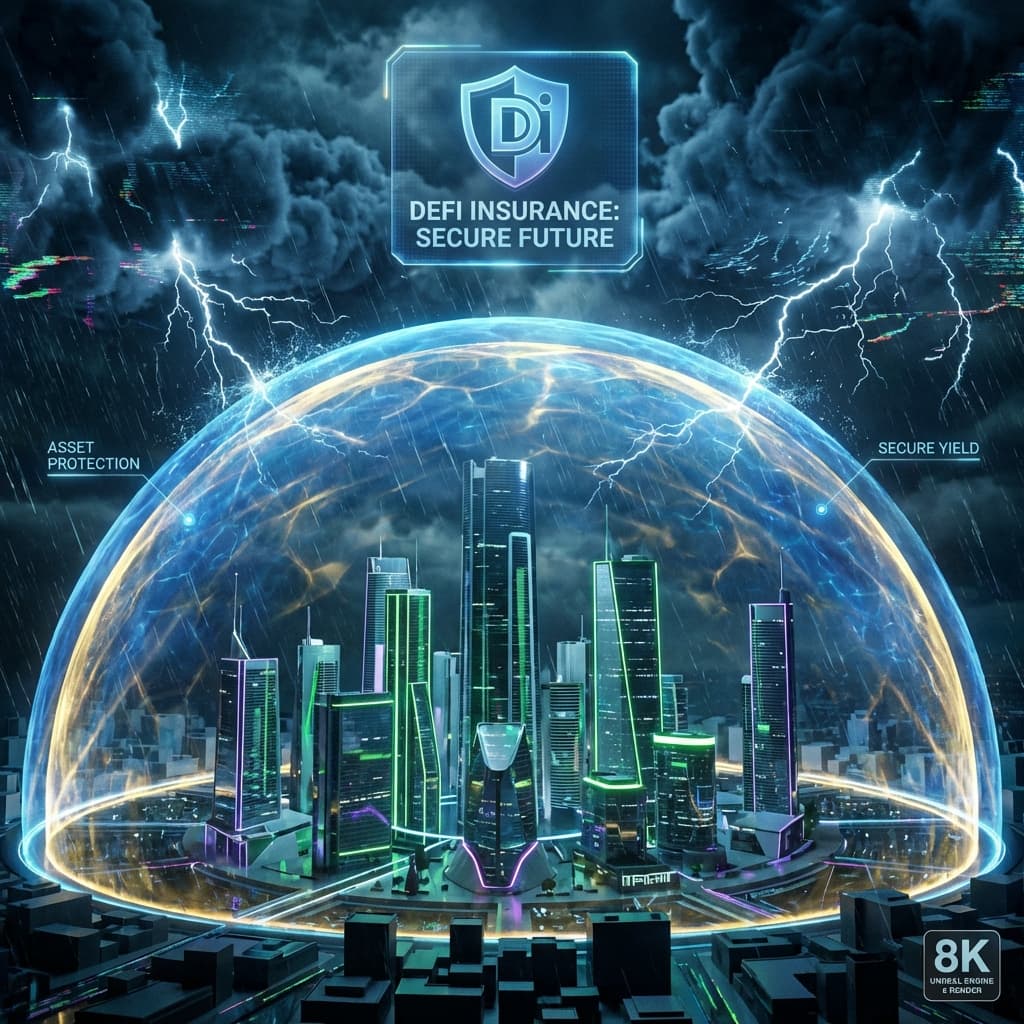
Executive Summary: In 2024, if a protocol got hacked, you lost everything. In 2026, the mature DeFi ecosystem offers robust insurance layers. From "Protocol Cover" to "Peg Protection," this guide explains how institutional farmers hedge their smart contract risk using parametric insurance that pays out automatically.
1. Introduction: The Cost of Doing Business
Yield Farming is risk-free until it isn't. The "Rug Pulls" of the past decade taught us a valuable lesson: Audits are not enough. Even audited code has bugs.

In 2026, allocating capital to a DeFi pool without insurance is considered "Gross Negligence" by most institutional risk officers. The cost of insurance (typically 1-2% of APY) is simply the cost of doing business to secure the remaining 10% APY.
2. Core Analysis: Parametric Insurance
The biggest innovation is Parametric Insurance.
- Old Way (Discretionary): You file a claim. A DAO votes on whether to pay you. (Slow, political).
- New Way (Parametric): A smart contract monitors an Oracle. If
USDC price < $0.95for 6 hours, the contract automatically pays out to your wallet. No voting, no delays.

2.1 Top Protocols of 2026
- Nexus Mutual v4: The market leader. Now offering "Bundled Covers" where you protect an entire portfolio (Aave + Uniswap + Curve) with one premium.
- Unslashed: Specializes in "Peg Risk" (e.g., insuring that stETH stays pegged to ETH).
- Sherlock: A "Code Audit + Insurance" hybrid where the auditors themselves stake money to back the security of the protocol.
2.2 Risk vs. Reward Calculation
| Protocol | Strategy APY | Insurance Cost | Net APY | Risk Level |
|---|---|---|---|---|
| Aave USDC | 8.5% | 0.8% | 7.7% | Low (Insured) |
| Curve 3pool | 12.0% | 1.5% | 10.5% | Low (Insured) |
| New Farm X | 45.0% | N/A (Uninsurable) | 45.0% | Extreme (Naked) |
3. Technical Implementation: Purchasing Cover
Most interactions happen via the dApp UI, but for automated funds, we use the SDK.
# 2026 Nexus Mutual SDK Integration
def purchase_cover(protocol_address, cover_amount, duration_days):
    quote = nexus.get_quote(
        address=protocol_address,
        amount=cover_amount,
        currency='ETH',
        period=duration_days
    )

    if quote.price < MAX_PREMIUM_THRESHOLD:
        print(f"Purchasing cover for {quote.price} ETH")
        nexus.buy_cover(quote, on_behalf_of=MY_WALLET)
    else:
        print("Premium too high. Reducing exposure instead.")
4. Challenges & Risks: Correlation Risk
The "God Mode" risk in 2026 is Correlation. If a catastrophic bug hits the EVM itself (e.g., Geth client bug), all insurance pools (which are also built on EVM) might fail simultaneously or become insolvent due to massive claim volume.
- Mitigation: Diversify insurance providers across L1s (e.g., buy cover on Solana for your Ethereum assets).
5. Future Outlook: Reinsurance Markets
We are seeing the entry of traditional reinsurers (Lloyd's of London) providing capital to DeFi insurance pools. This "Capital Tranche" structure allows DeFi protocols to underwrite billions in risk, far exceeding what a crypto-native DAO could cover.
6. FAQ: Insurance
1. Does insurance cover user error? No. If you lose your private key or send funds to the wrong address, Nexus Mutual will not pay you. It covers technical failure.
2. How fast are payouts? Parametric payouts are instant. Discretionary payouts (for hacks) take ~3-5 days for claims assessment.
3. Is the insurance premium tax deductible? For businesses, yes, it behaves like a standard business expense.
4. Can I short a protocol using insurance? Yes. You can buy cover on a protocol you don't use. If it gets hacked, you get paid. This is effectively a "Credit Default Swap" (CDS).
5. What is "KYC" for insurance? Some providers (like Nexus) require KYC to ensure they are not insuring money launderers. Others (like localized bridge insurance) are permissionless.

Related Articles
Crypto Trading Addiction: The Silent Crisis of 2026
When the charts control your life, you've already lost. Recognizing the signs of dopamine-driven trading addiction and actionable strategies to reclaim your mental health.
AI-Powered Explainable Risk Management: Beyond VaR
The Black Box era is over. In 2026, Institutional Risk Management demands Explainable AI (XAI) to detect tail risks invisible to traditional VaR models.
Portfolio Correlation Matrix: The Lie of Diversification
Think you're diversified because you own 50 coins? Think again. In a crash, correlation hits 1.0. Learn how to build a true Delta Neutral portfolio.