
AI-Powered Explainable Risk Management: Beyond VaR
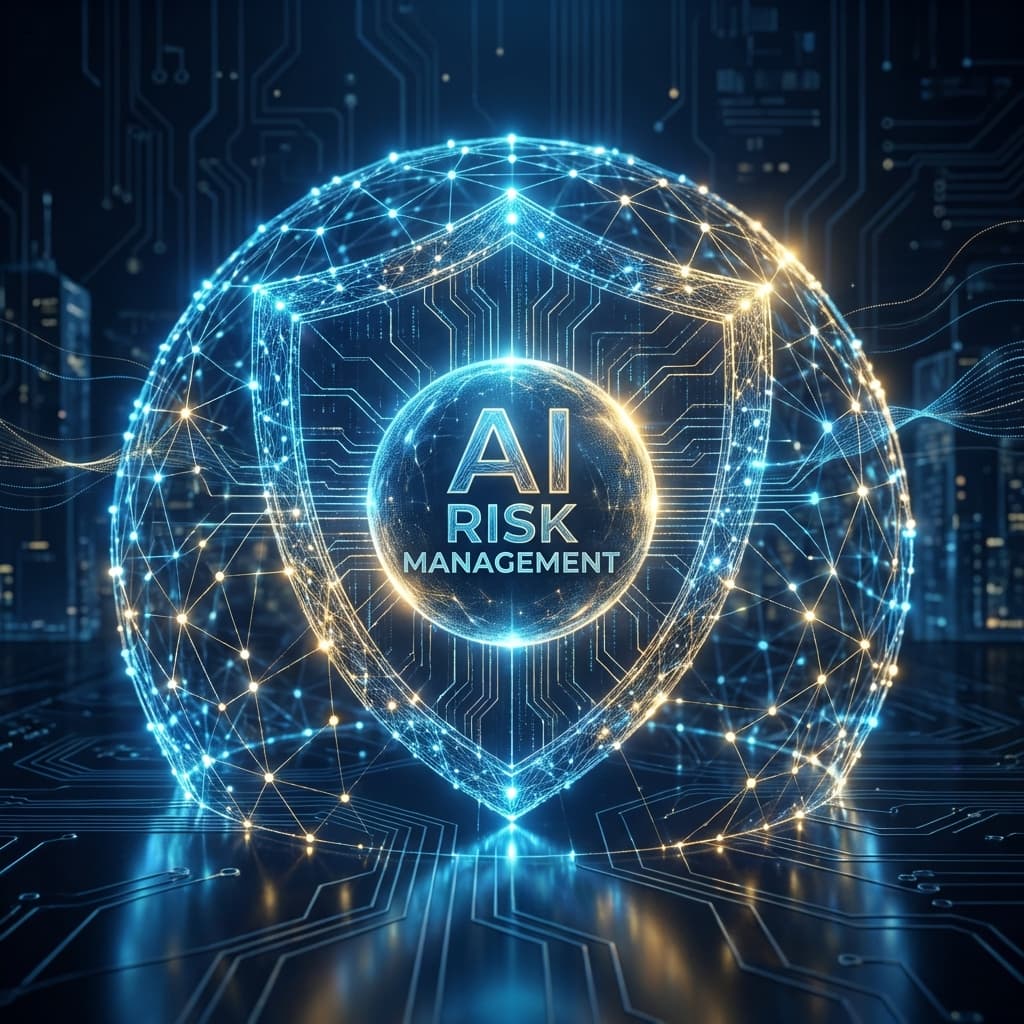
Executive Summary: Traditional Value-at-Risk (VaR) models failed to predict the volatility shocks of 2024. As we settle into 2026, the industry standard has shifted to Explainable AI (XAI) risk engines. These systems not only quantify the probability of a drawdown but explain why it might happen, citing specific causal chains in on-chain data and macro sentiment.
1. Introduction: The Failure of the Gaussian Bell Curve
For decades, risk managers relied on the assumption that market returns follow a normal distribution (Bell Curve). Crypto markets, however, are defined by "Fat Tails"—extreme events that happen far more often than statistics predict.
In 2026, we don't just ask "What is the maximum I can lose?" We ask "What hidden correlation could wipe me out?" AI-Powered Risk Management uses Deep Learning to identify non-linear correlations that human analysts misses, providing a safety net for the Agentic Economy.

2. Core Analysis: XAI in Action
2.1 Exploring "Explainability"
The "Black Box" problem has long deterred institutional adoption of AI. How can a Risk Officer sign off on a model they don't understand? Explainable AI (XAI) solves this by providing "Feature Importance" scores.
- Old AI: "Risk Score is 88/100."
- XAI (2026): "Risk Score is 88/100 because USDT depegging probability rose 2% AND liquidity in the ETH/USDC pool dropped 40%."
2.2 Dynamic Position Sizing
Traditional models use static sizing (e.g., "max 2% per trade"). XAI enables Dynamic Kelly Criterions, adjusting exposure in real-time based on the "Confidence Score" of the trade setup.
2.3 Traditional VaR vs. AI Risk Models
| Feature | Traditional VaR (2024) | AI Explainable Risk (2026) |
|---|---|---|
| Methodology | Historical Simulation | Predictive Generative Modeling |
| Inputs | Price History | Price, Sentiment, Liquidity, Geopolitics |
| Output | "95% confidence loss is $X" | "Scenario A (30% prob): Loss $X due to..." |
| Speed | Daily Batches | Real-Time Streaming |
| Action | Passive Reporting | Active Hedging / "Kill Switch" |

3. Technical Implementation: The Kill Switch
Regulatory compliance (MiCA, Basel IV) now mandates automated "Circuit Breakers" for algorithmic funds.
# Conceptual 2026 Risk Engine
class RiskGuardian:
    def check_exposure(self, portfolio):
        # Calculate Real-Time Tail Risk
        risk_score, explanation = self.xai_model.predict_risk(portfolio)

        if risk_score > CRITICAL_THRESHOLD:
            # AUTOMATED KILL SWITCH
            print(f"EMERGENCY HEDGE TRIGGERED: {explanation}")
            self.execute_hedge(portfolio)
            return False

        return True
4. Challenges & Risks: Model Drift
AI models are trained on past data. If market dynamics shift fundamentally (e.g., a new asset class emerges), the model may suffer from Model Drift.
- Solution: Continuous Learning pipelines that retrain the risk engine daily, ensuring it recognizes new types of "Black Swan" precursors.

5. Future Outlook: Regulator Nodes
By late 2026, we expect to see "Regulator Nodes" on permissioned DeFi chains. These are observer nodes run by agencies (like the SEC or ESMA) that receive real-time risk reports from institutional participants, automating compliance audits.
6. FAQ: AI Risk
1. Does AI allow for higher leverage? Surprisingly, yes. Because AI monitors risk in real-time, it allows traders to use leverage more surgically, scaling up when conditions are perfect and cutting immediately when risk spikes.
2. Can AI predict a rug pull? To an extent. XAI models analyze smart contract code and liquidity wallet movements to flag "Soft Rug" probabilities before they happen.
3. What is "Tail Risk"? Tail Risk refers to extreme market moves (3+ standard deviations) that occur rarely but cause massive damage. AI is specifically designed to hunt for these scenarios.
4. Is this relevant for retail traders? Yes. TradingMaster AI's dashboard includes a "Risk Gauge" powered by this exact technology, warning you when your portfolio is over-exposed to a specific sector.
5. How does XAI affect insurance premiums? Cipher-insurance protocols now offer lower premiums to funds that can prove they use XAI-driven risk management, as the probability of catastrophic loss is lower.

Related Articles
Crypto Trading Addiction: The Silent Crisis of 2026
When the charts control your life, you've already lost. Recognizing the signs of dopamine-driven trading addiction and actionable strategies to reclaim your mental health.
DeFi Insurance Protocols 2026: Protecting Your Yield
Don't yield farm naked. In 2026, DeFi insurance is no longer optional. We review Nexus Mutual v4, Unslashed, and the rise of Parametric Covers.
Portfolio Correlation Matrix: The Lie of Diversification
Think you're diversified because you own 50 coins? Think again. In a crash, correlation hits 1.0. Learn how to build a true Delta Neutral portfolio.