
Layer 2 Scaling Solutions 2026: The Rollup Wars

Executive Summary: In 2026, nobody uses Ethereum Mainnet for daily trading. It costs $50 per swap. Everyone lives on "Layer 2s"—scaling solutions that inherit Ethereum's security but cost $0.01 per transaction. This guide explains the differences between the "Big Four" and which one you should choose.
1. Introduction: The "Superchain" Era
Three years ago, moving funds to a Layer 2 felt like visiting a foreign country. Today, it feels like moving between rooms in the same house. With "Intents-Based Bridging," you might not even know which chain you are on.
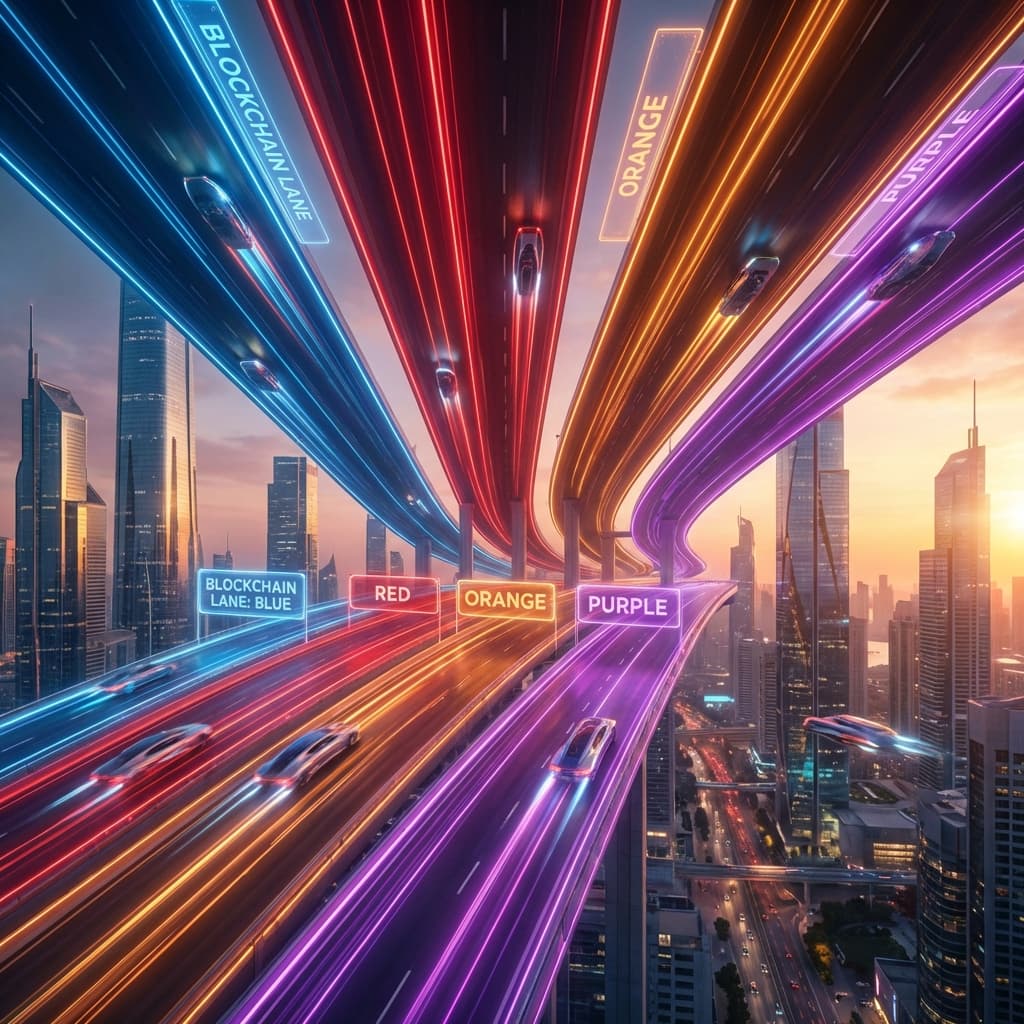
But underneath the hood, these chains are fighting a fierce war for your liquidity. The winner gets to be the "Visa Network" of the global crypto economy.
2. Core Analysis: Optimistic vs. ZK Rollups
2.1 Optimistic Rollups (Arbitrum, Optimism, Base)
They assume all transactions are valid unless proven otherwise (Innocent until proven guilty).
- Pros: Cheaper, EVM compatible.
- Cons: 7-day withdrawal period (if bridging back to L1 via official bridge).

2.2 ZK Rollups (ZK-Sync, Starknet, Scroll)
They use math to prove validity instantly (Verified at the gate).
- Pros: Instant withdrawals, mathematically secure.
- Cons: Computationally expensive (higher gas fees than Optimistic).
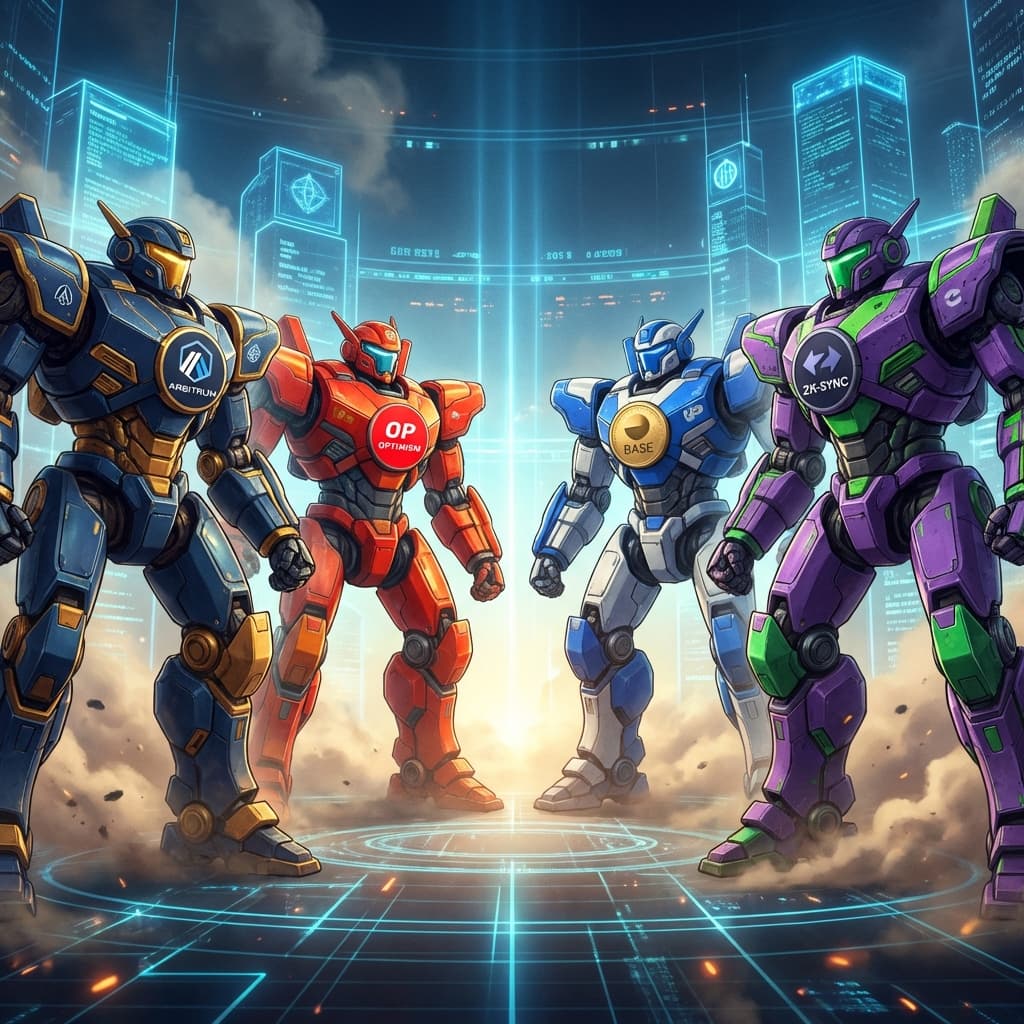
2.3 The 2026 Big Four Comparison
| Network | Tech Type | Avg cost (Swap) | Best For |
|---|---|---|---|
| Arbitrum One | Optimistic | $0.05 | DeFi Power Users (GMX) |
| Base (Coinbase) | Optimistic | $0.01 | Retail / Social Apps |
| Optimism (OP) | Optimistic | $0.05 | Governance / DAOs |
| ZK-Sync Era | ZK-Rollup | $0.12 | Privacy / Payments |
3. Technical Implementation: Adding L2s to MetaMask
In 2026, you don't need to add RPCs manually. The EIP-6963 standard allows wallets (like MetaMask) to auto-detect networks. However, if you need to add one manually:
// Base Mainnet Settings
{
  "Network Name": "Base Mainnet",
  "RPC Endpoint": "https://mainnet.base.org",
  "Chain ID": 8453,
  "Currency Symbol": "ETH",
  "Explorer": "https://basescan.org"
}
4. Challenges & Risks: The "Sequencer" Risk
Most L2s are still Centralized Sequencers. This means a single company (offchain labs or Optimism Foundation) orders the transactions. If they go offline, the chain halts.
- Solution: "Shared Sequencing" (Espresso Systems) is rolling out in late 2026 to decentralize this layer.
5. Future Outlook: Layer 3 (App Chains)
We are now seeing "Layer 3s"—chains built on top of Arbitrum. For example, a gaming chain (Xai) runs on top of Arbitrum, which runs on top of Ethereum. This "Fractal Scaling" allows for millions of TPS.
6. FAQ: Layer 2s
1. Is my money safe on Base? Yes, Base inherits Ethereum's security. Even if Coinbase disappears, you can technically "Force Exit" your funds back to Ethereum L1 (though it's technical).
2. Why is Mainnet still expensive? Mainnet is now the "Settlement Layer" for L2s. It's for whales and institutions, not for buying coffee.
3. Do I need ETH on Arbitrum? Yes. You need "Arbitrum ETH" for gas. You can't use "Mainnet ETH" directly.
4. Which bridge is safest? The "Official Bridge" of the L2 is always safest but slow (7 days). For speed, use "Liquidity Bridges" like Across or Stargate (rebranded to LayerZero).
5. What is the "Superchain"? Optimism's vision where many chains (Base, OP, Zora) share a single bridge and communication standard, making them feel like one giant network.

Related Articles
Account Abstraction Use Cases 2026: The End of Seed Phrases
Lost your seed phrase? In 2026, it doesn't matter. Discover how ERC-4337 Account Abstraction is making Web3 indistinguishable from Web2.
The Ultimate Guide to Bridging Assets Safely in 2026
Cross-chain bridges are the most hacked target in crypto. Learn how to move money from Solana to Ethereum without losing it.
Decentralized Identity (DID) Explained: Owning Your Data
Stop using 'Login with Google'. In 2026, your Ethereum wallet is your passport, credit score, and social profile wrapped in one.