
How Reinforcement Learning Adapts to Market Volatility

Most trading bots are static. You set the parameters, and they execute blindly. Reinforcement Learning (RL) changes the game by introducing an agent that learns through trial and error, optimizing for a reward function (usually Profit & Loss).
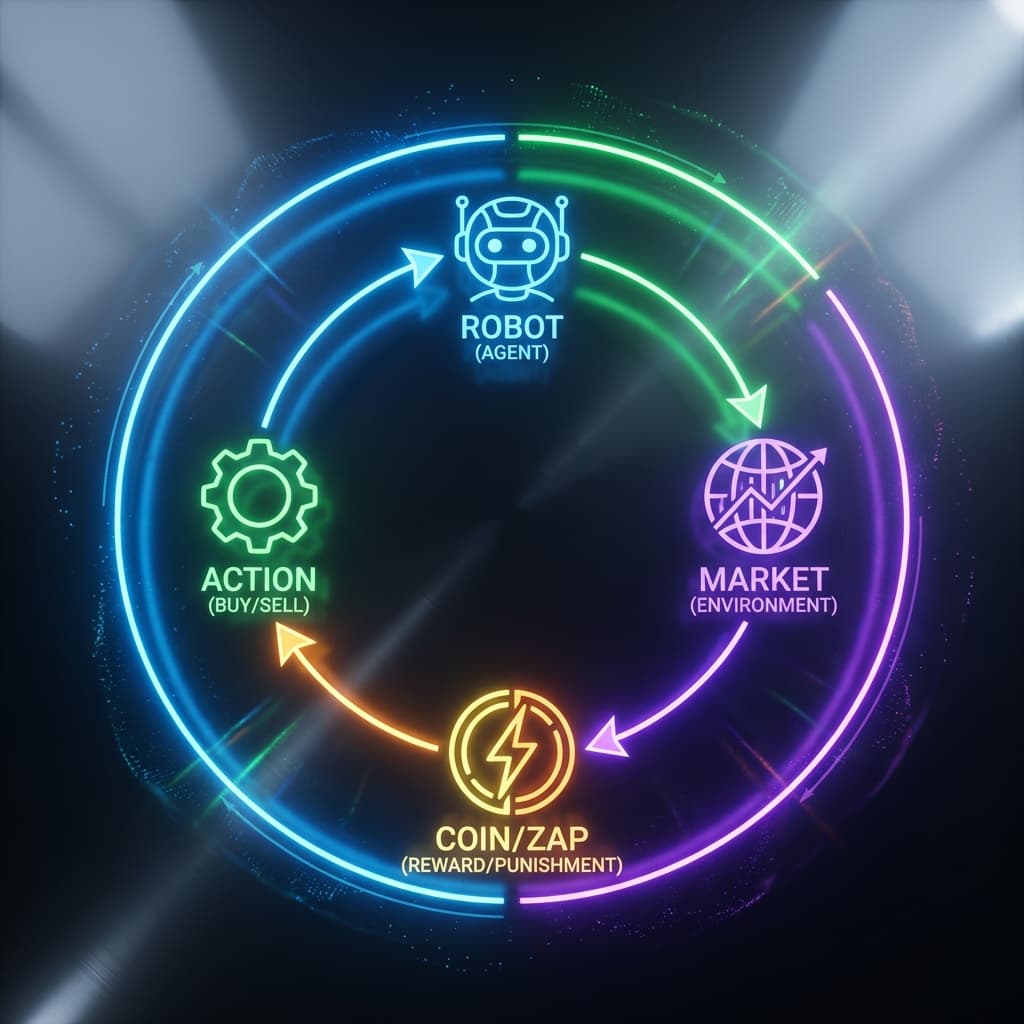
The RL Loop in Trading
- Agent: The trading bot.
- Environment: The market (prices, order book).
- Action: Buy, Sell, or Hold.
- Reward: Profit (positive) or Loss (negative).
The agent constantly observes the state of the market, takes an action, and receives feedback. Over millions of simulations (or "epochs"), it learns a policy that maximizes long-term rewards.
Adapting to Volatility
The superpower of RL is adaptation.
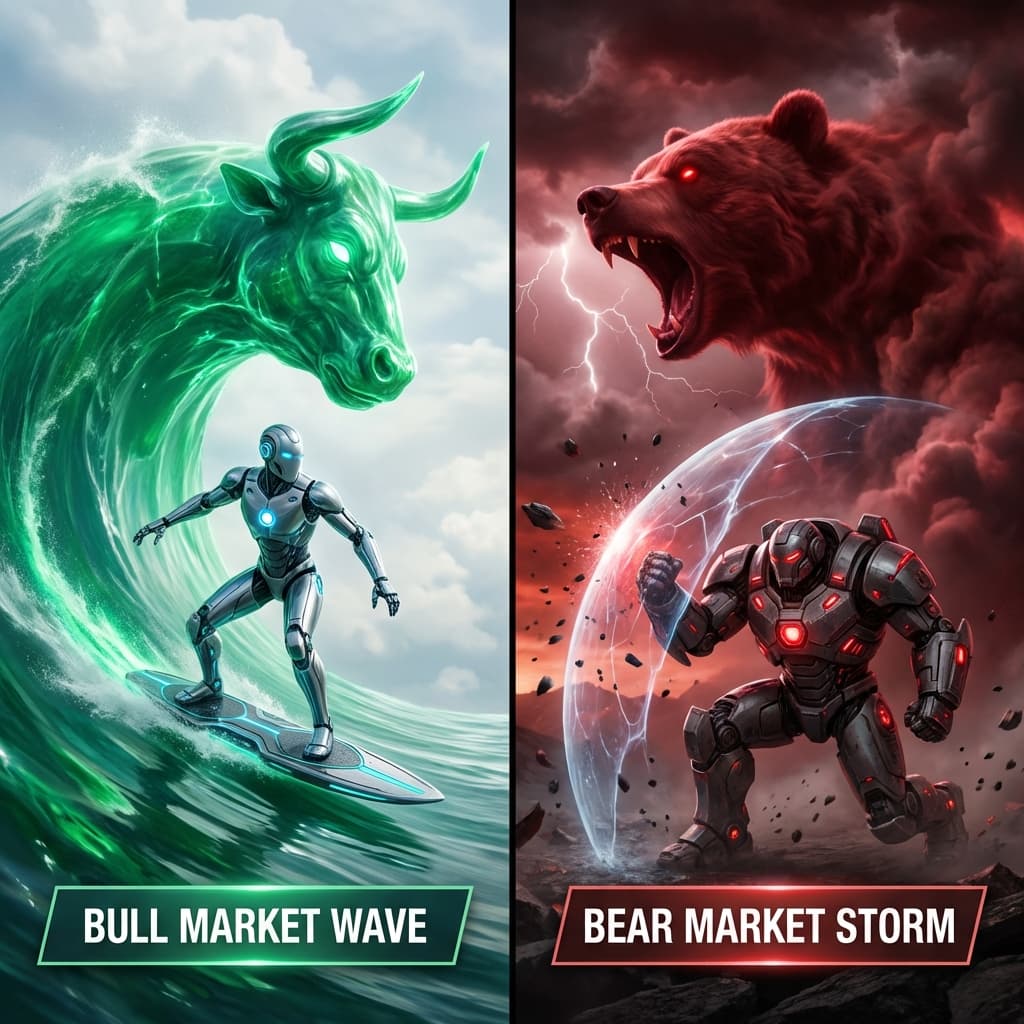
- Bull Market: The agent learns that "Buy and Hold" yields the highest reward.
- Choppy Market: The agent realizes that holding leads to drawdowns, so it switches to a mean-reversion style.
Unlike Grid Bots, which require you to define the range, an RL agent can find the optimal range dynamically.
Challenges of RL
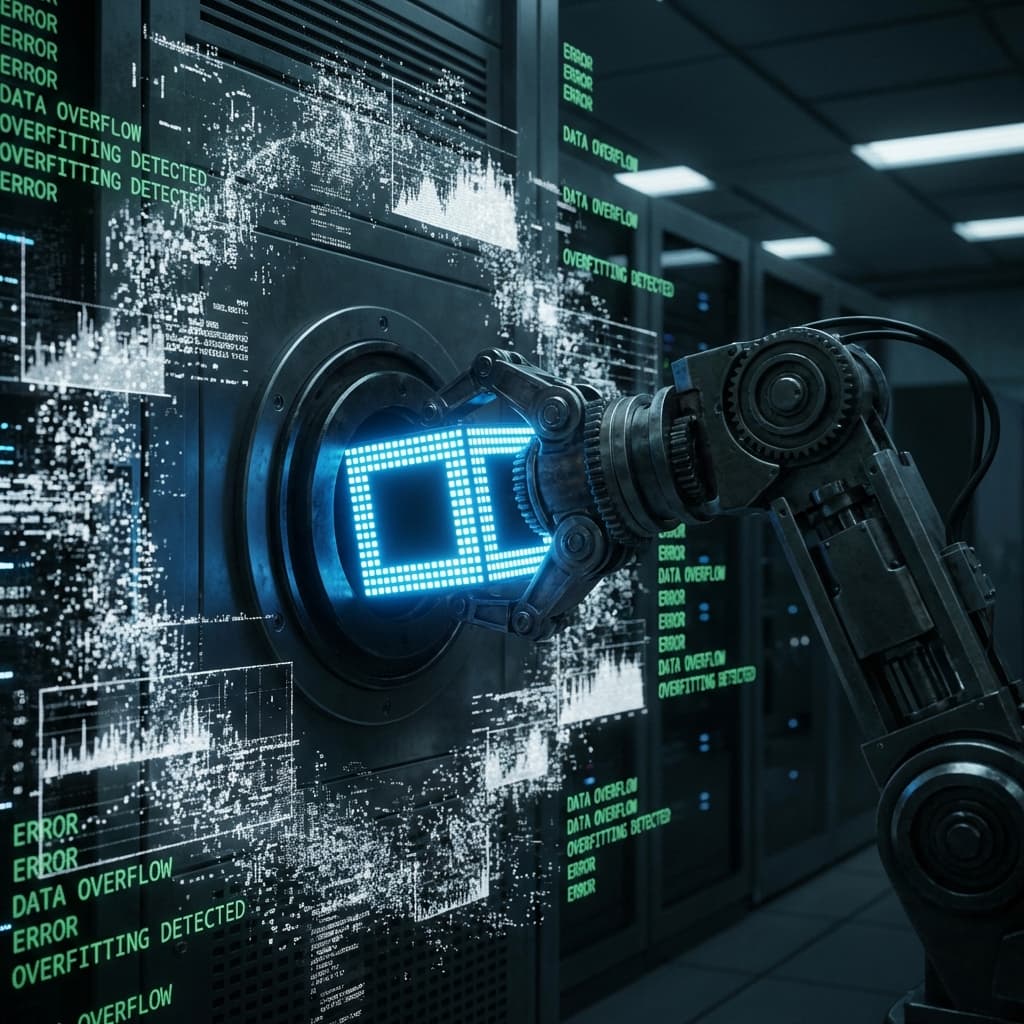
It's not all smooth sailing. RL models can be prone to overfitting—memorizing past noise instead of learning true patterns. That's why Feature Engineering is crucial to feed the agent clean, meaningful data.
Try It Out
Our "Adaptive" strategies on the Dashboard utilize RL principles to adjust stop-losses and take-profits in real-time. Experience the evolution of trading.

Related Articles
Agentic AI Trading Bots 2026: The Rise of Autonomous Finance
From chatbots to autonomous agents. Discover how 2026's Agentic AI is rewriting the rules of algorithmic trading, risk management, and regulatory compliance.
AI Sentiment Analysis: Decoding Crypto Twitter 2026
Charts lie. Twitter doesn't. Learn how AI bots scrape millions of tweets to detect FOMO and FUD before the candles move.
Neuromorphic Computing: The Future of Trading Bots 2026
GPUs are power hungry. Neuromorphic chips (like Intel Loihi 3) mimic the human brain, allowing trading bots to run with 1000x less energy.