
Reinforcement Learning Trading Strategies 2026
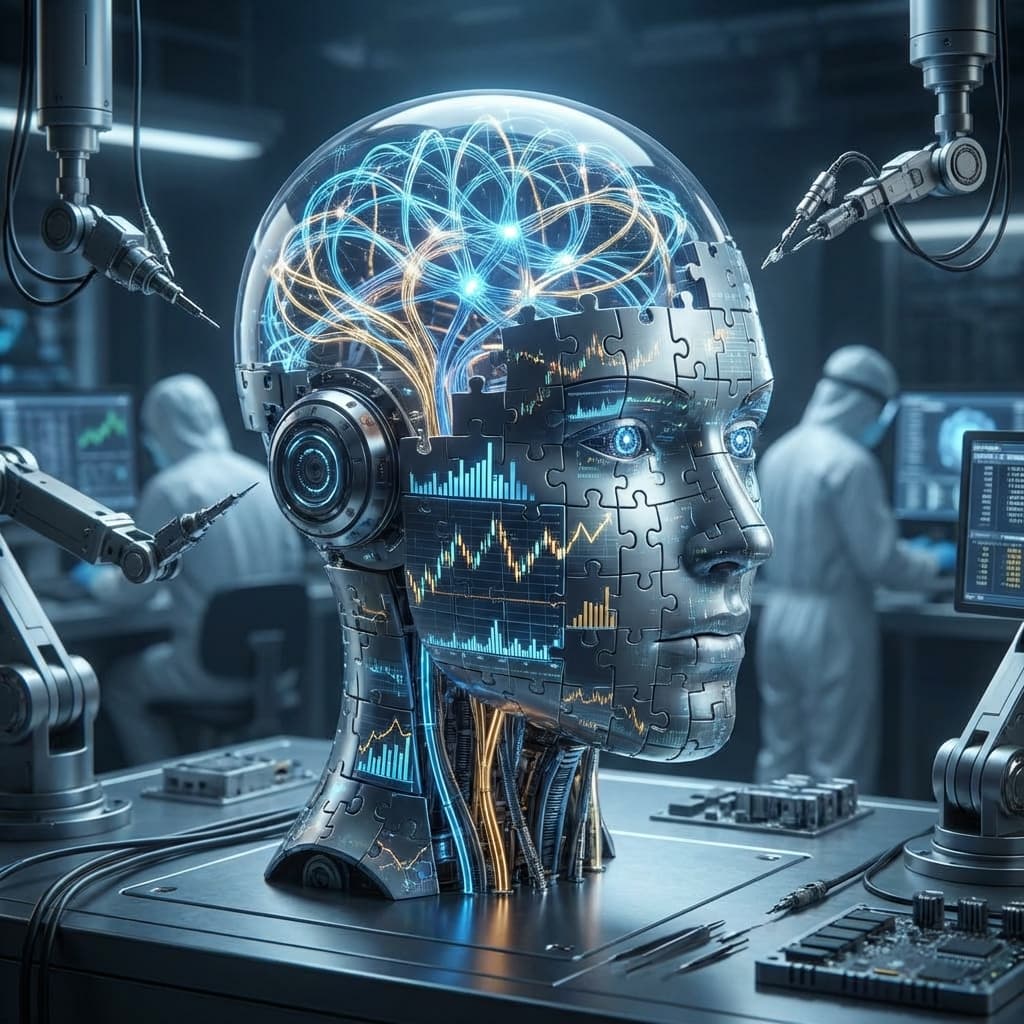
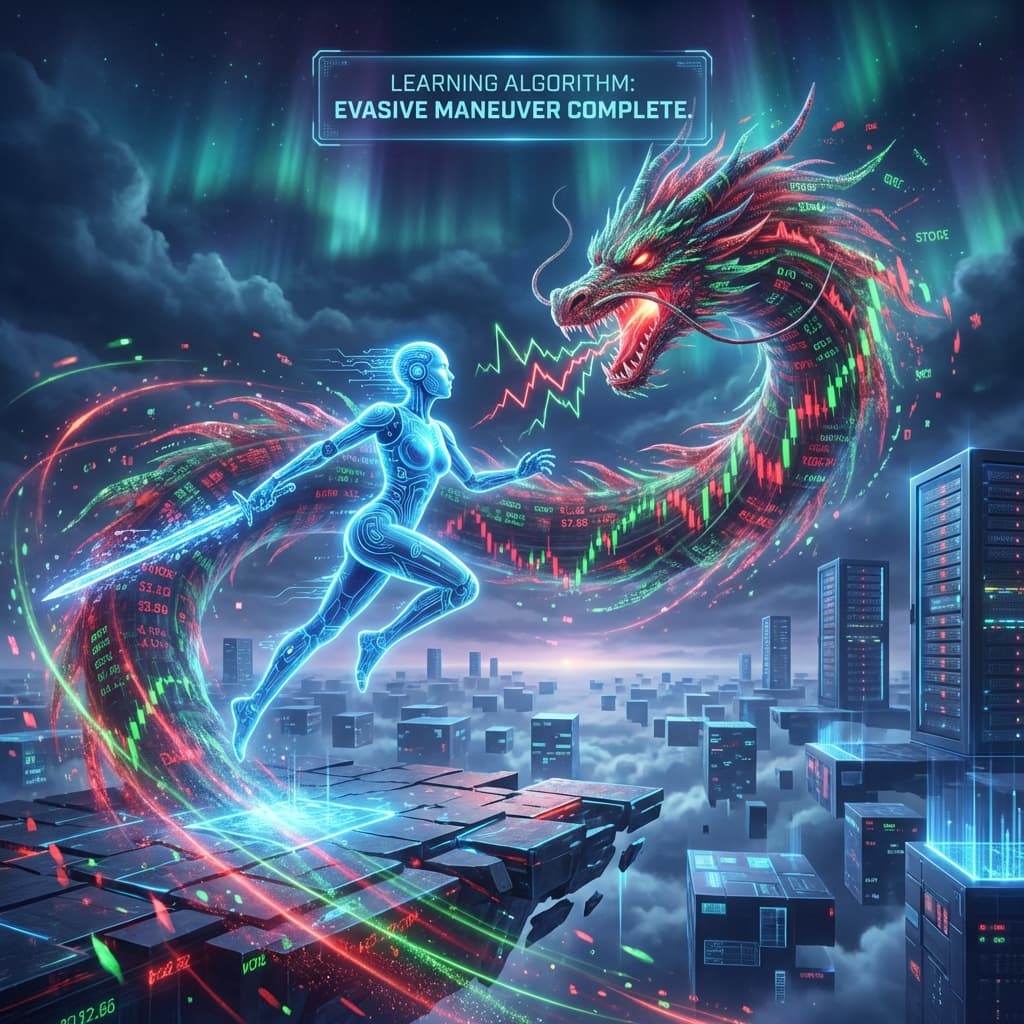
Executive Summary: In 2020, "AI Trading" meant a linear regression model. In 2026, it means Deep Reinforcement Learning (DRL). We train autonomous agents that play the stock market like a video game, rewarding them for profit and punishing them for drawdowns. This guide explains how PPO and A2C algorithms are reshaping HFT.
1. Introduction: From Rules to Rewards
A traditional bot works on If/Then logic: "If RSI > 70, Sell." A Reinforcement Learning bot works on Reward Functions: "Maximize Portfolio Value while minimizing Volatility."
The bot figures out how to achieve this. It might discover that RSI > 70 is actually a buy signal in a strong bull run—a nuance explicitly programmed bots would miss.
2. Core Analysis: The Agent-Environment Loop
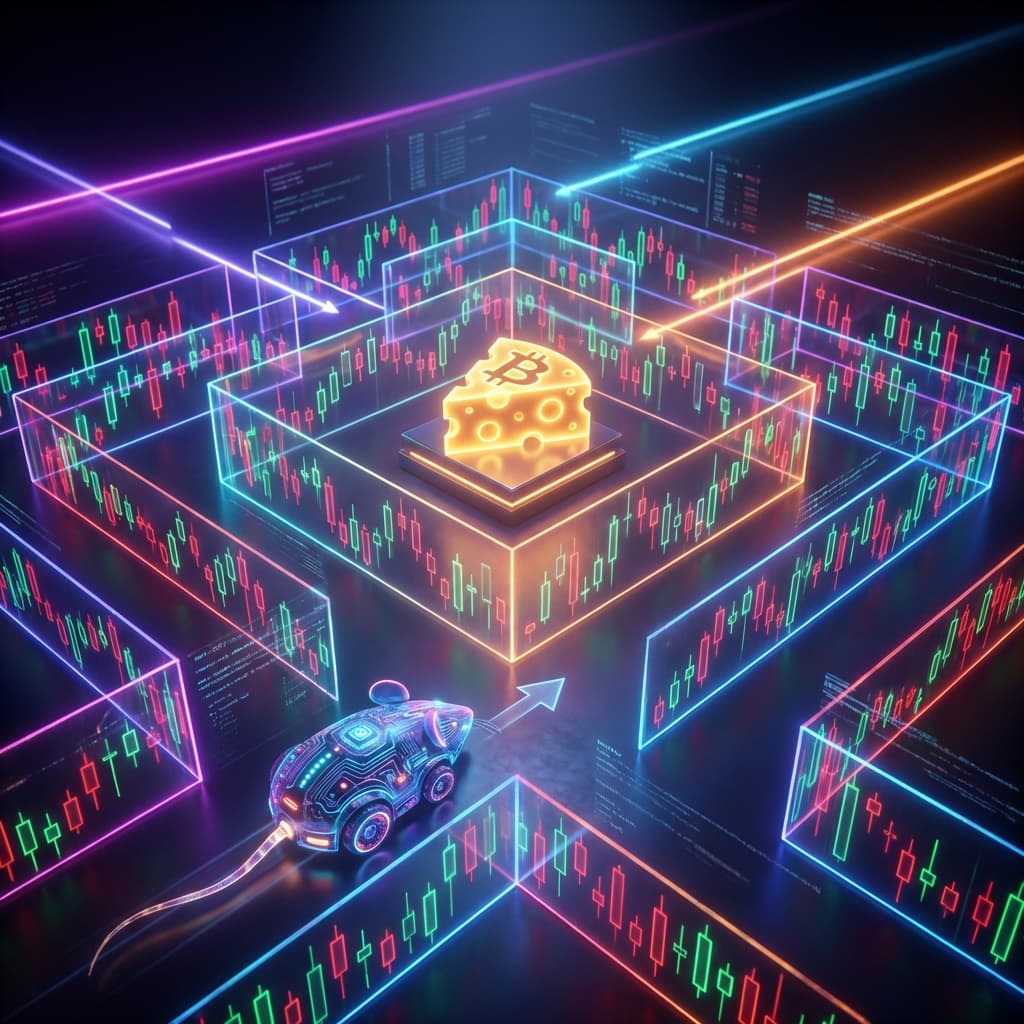
2.1 The Components
- Agent: The AI Trader (Policy Neural Network).
- Environment: The Market (Orderbook, recent price history, account balance).
- Action: Buy, Sell, or Hold.
- Reward: +1% (Profit) or -1% (Loss).
2.2 Algorithms of 2026
- PPO (Proximal Policy Optimization): The "Reliable Workhorse." Used by OpenAI, it balances exploration (trying new things) and exploitation (doing what works).
- DQN (Deep Q-Network): Good for discrete actions (Buy/Sell), but struggles with continuous portfolio sizing.
- Transformer-DRL: A 2026 innovation where the agent uses an Attention Mechanism to focus on specific past events (e.g., "This crash looks like 2020").
2.3 Performance Benchmark
| Strategy | Bull Market Return | Bear Market Return | Max Drawdown |
|---|---|---|---|
| Buy & Hold (BTC) | +150% | -70% | 75% |
| RSI Bot | +40% | -10% | 25% |
| PPO Agent (AI) | +110% | +15% (Shorting) | 12% |
3. Technical Implementation: Typical Setup
We use stable-baselines3 and gym-anytrading in Python.
# 2026 DRL Training Loop
import gymnasium as gym
from stable_baselines3 import PPO

# Create the Market Environment
env = gym.make('stocks-v0', df=bitcoin_data, frame_bound=(50, 1000), window_size=50) # See <a href="https://gymnasium.farama.org/" target="_blank">Gymnasium</a> docs

# Initialize the PPO Agent
model = PPO("MlpPolicy", env, verbose=1)

# Train for 1 Million Timesteps
print("Training AI Agent...")
model.learn(total_timesteps=1000000)

# Backtest
obs, info = env.reset()
while True:
    action, _states = model.predict(obs)
    obs, rewards, terminated, truncated, info = env.step(action)
    if terminated:
        print("Backtest Finished. Final Profit:", info['total_profit'])
        break
4. Challenges & Risks: Overfitting
Neural Networks are too good at memorizing. If you train on 2020-2024 data, the bot will memorize the Covid Crash and assume every dip is a V-shaped recovery.
- Solution: Synthetic Data Injection. We train the bot on thousands of "fake" market scenarios (GAN-generated) so it learns general principles, not specific history.
5. Future Outlook: Multi-Agent Swarms
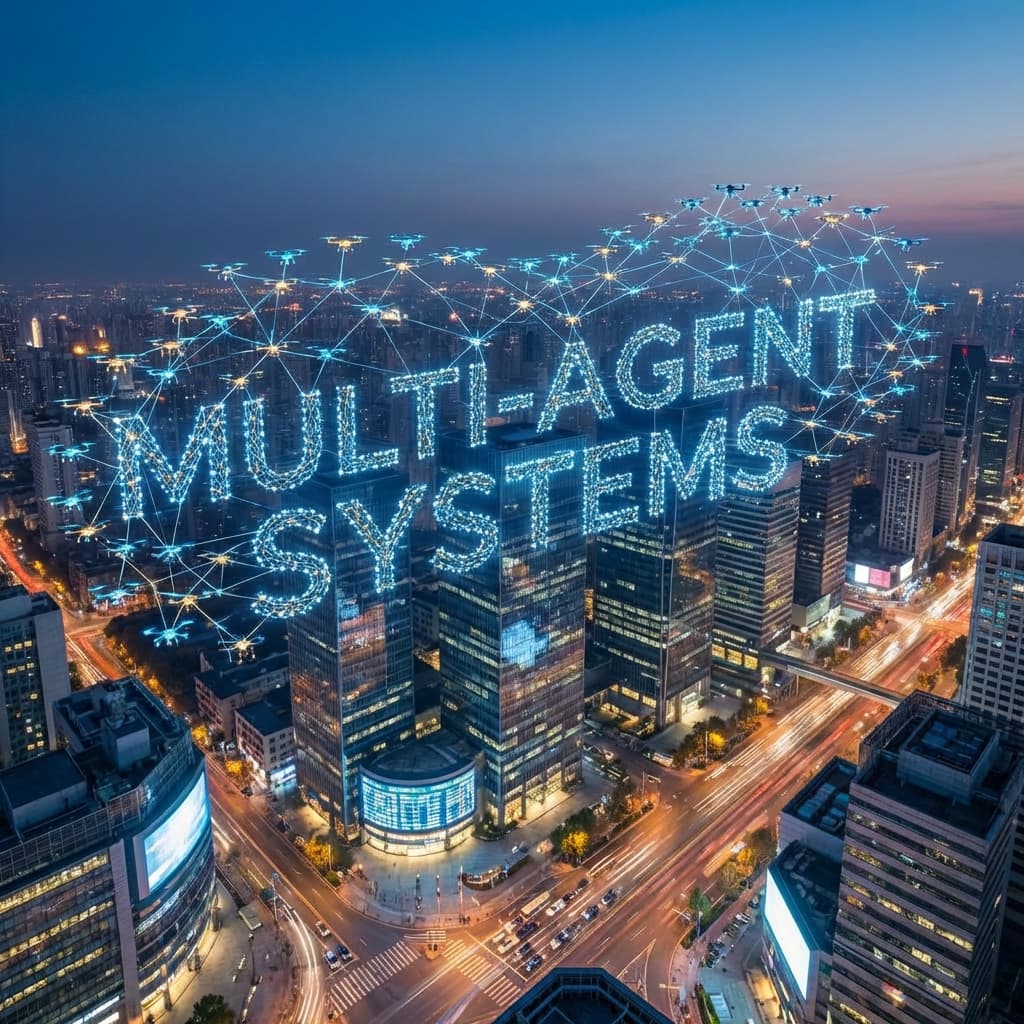
By 2027, hedge funds will not run one super-bot. They will run a Swarm.
- Agent A (Aggressive): Hunts breakout volatility.
- Agent B (Conservative): Hedges with options.
- Agent C (Manager): Allocates capital between A and B based on market regime.
6. FAQ: AI Trading
1. Can I run this on my laptop? Training takes a GPU. Inference (running the live bot) can run on a Raspberry Pi.
2. Why PPO and not LSTM? LSTM is for prediction (Price will be $100). PPO is for control (I should Buy now). Prediction != Profit.
3. Do large funds use this? Yes. Renaissance Technologies and Two Sigma have been using early versions of this for decades. Now, open-source libraries make it accessible to retail.
4. How long does it take to learn? A simple agent learns to be profitable in about 200,000 timesteps (1 hour on an RTX 5090).
5. What is "Reward Hacking"? If you reward the bot only for profit, it might take insane leverage risks to win big. You must penalize volatility in the reward function (Sharpe Ratio reward).

Related Articles
Agentic AI Trading Bots 2026: The Rise of Autonomous Finance
From chatbots to autonomous agents. Discover how 2026's Agentic AI is rewriting the rules of algorithmic trading, risk management, and regulatory compliance.
AI Sentiment Analysis: Decoding Crypto Twitter 2026
Charts lie. Twitter doesn't. Learn how AI bots scrape millions of tweets to detect FOMO and FUD before the candles move.
Neuromorphic Computing: The Future of Trading Bots 2026
GPUs are power hungry. Neuromorphic chips (like Intel Loihi 3) mimic the human brain, allowing trading bots to run with 1000x less energy.