


Address Poisoning: Why Copy-Pasting Your Wallet Address is Dangerous
Executive Summary: Address Poisoning is a psychological attack, not a code exploit. Scammers flood your transaction history with lookalike addresses, hoping you'll copy the wrong one by mistake. This guide explains how to spot 'Vanity Addresses' and verify transactions properly.
1. The Mechanic: Vanity Address Generators
In crypto, we are trained to check the start and end of an address.
- My Address:
0x1234...ABCD - Scammer's Address:
0x1234...ABCD
Hackers use massive GPU farms to generate "Vanity Addresses." They can create an address that matches the first 4 and last 4 characters of your wallet in seconds.
2. The Attack: Polluting the History
The attacker watches the blockchain. When they see you make a transfer (e.g., sending USDT to Binance), they strike.
- They generate a lookalike address that matches your Binance deposit address.
- They send a $0 transaction (or a tiny amount like 0.0001 USDT) to your wallet from this lookalike address.
- The Trap: Now, the scammer's address sits at the top of your transaction history.
Next time you want to deposit to Binance, you open your wallet, see the last transaction, assume it was your previous successful deposit, copy it, and send the funds.
Result: You just sent your life savings to the hacker.
3. Why It Works (The Human Flaw)
This attack exploits System 1 Thinking (Fast, Automatic).
- Your brain sees
0x1234andABCD. - Your brain says "Match confirmed."
- You click send.
It is impossible for humans to memorize the random 30+ characters in the middle, which is exactly where the difference lies.
4. The Defense: The "Middleman" Check
Don't Trust History
Never copy addresses from your transaction history (Etherscan or MetaMask activity log).
Always copy the address from the destination source (e.g., the "Deposit" page on Binance or your cold storage device).
The "Spot Check"
Stop checking the first/last 4 digits. They are easily spoofed.
Check the middle 4 digits.
- Safe:
...8821... - Scam:
...9942...
Hackers cannot easily generate addresses that match the middle characters without immense computing power (trillions of years).
Use Contact Books
Most wallets allow you to save "Whitelisted" addresses.
- Save your "Binance Deposit" address as a contact.
- Only send to saved contacts.
Related: Learn how to avoid Malicious Approvals that drain your wallet without a transaction, and master the Bookmark Rule to verify your destinations.
Conclusion
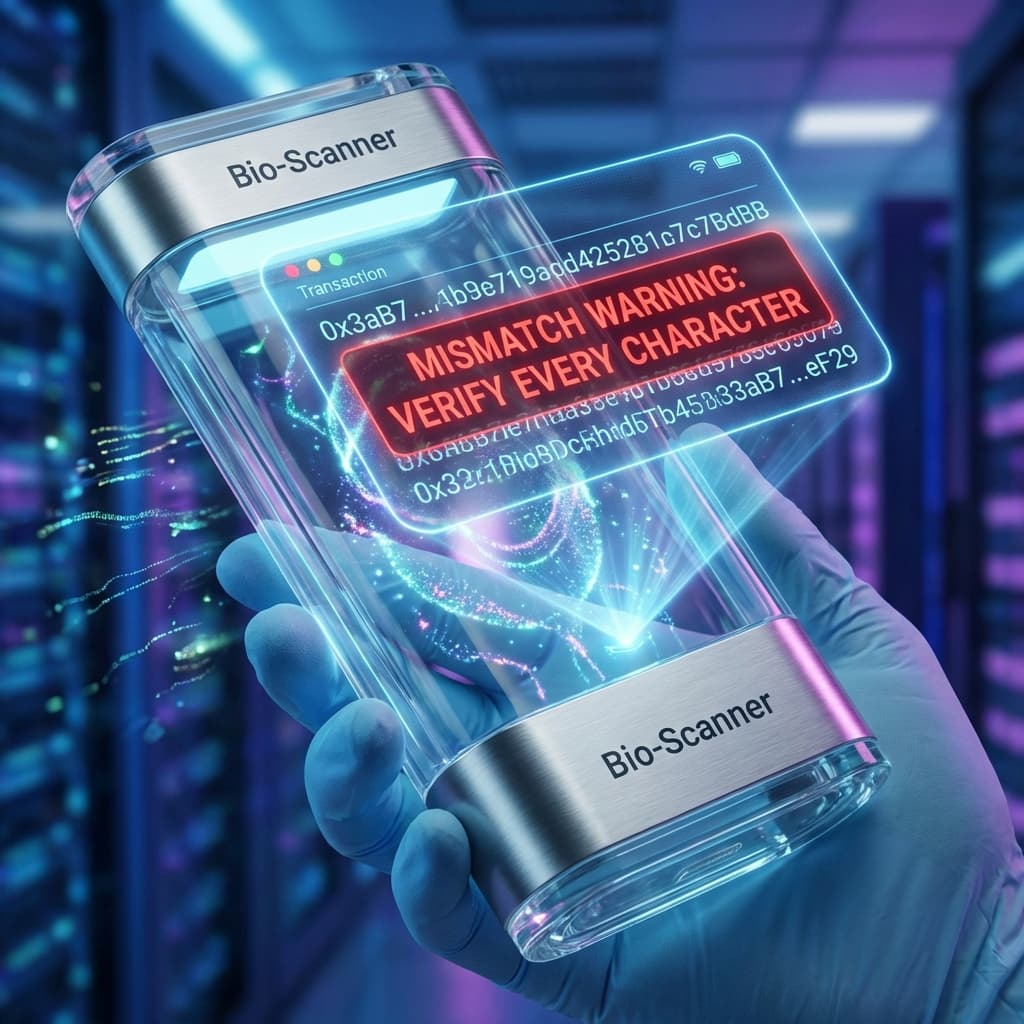
Blockchain transactions are immutable. A copy-paste error is permanent. Treat every transaction like a bomb defusal—verify the entire string, not just the ends.

Related Articles
The Long Con: How 'Pig Butchering' Scams Steal Hearts and Wallets
It starts with a 'wrong number' text. It ends with you losing your retirement. Inside the psychological playbook of the 'Sha Zhu Pan' (Pig Butchering) scam.
Don't Trade Where You Play: The Case for a Dedicated Crypto Device
Your gaming PC is full of cracks. Your phone is full of trackers. Why spending $200 on a dedicated 'Banking Device' is the best insurance policy you can buy.
The Hidden Backdoor: Why You Must Revoke Permissions
You disconnected your wallet, but the hacker can still drain it. Learn how 'Unlimited Allowances' work and how to lock your digital backdoors.